Featured

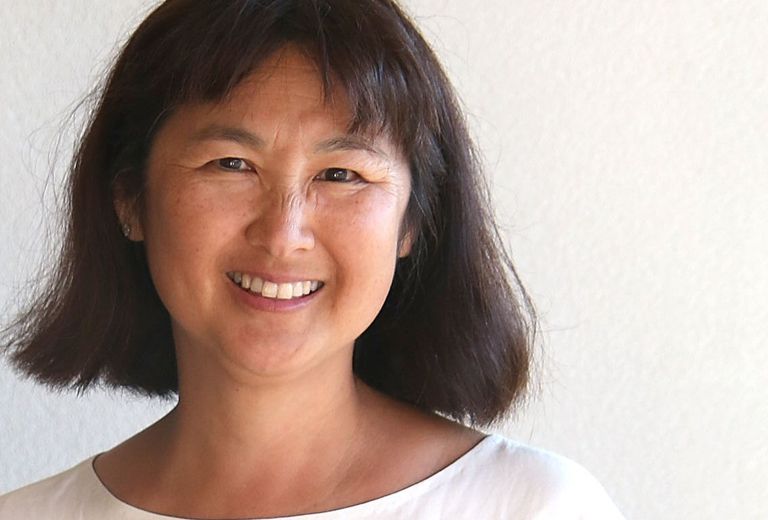
Celebrating Maya Ying Lin: Asian American and Pacific Islander Heritage Month

Asian Pacific American Heritage month is celebrated in May where we honor the histories of Americans from Asia and the Pacific islands of Melanesia, Polynesia, and Micronesia.

According to Torchinsky, the legislation designated May as Asian Pacific American Heritage Month because of May 7th and May 10th.

May 7th, 1843 is when the first Japanese immigrants arrived to the U.S., and May 10th, 1869 recognizes the completion of the first transcontinental railroad, which heavily benefited Chinese workers, in the United States.

To celebrate, we are recognizing several Asian/Pacific American artists over the course of this month, honoring both them and their work and discussing how their work has influenced our country today.

Possibly the most influential of these artists is Maya Yin Ling.

Maya Yin Ling is an American architect and sculptor who resides in Athens, Ohio. Her style is very minimalist and post-minimalist as she explores Earth-related and environmental art.

Lin was born to Chinese parents who fled China in 1948 as the Communist takeover was beginning to take place. Her mother was a poet and a literature professor at Ohio University and her father was a ceramicist and the Dean of the School of Fine Art.

In 1977, Lin graduated as co-valedictorian of her high school and began studying architecture at Yale university. Her final year at university would be the kick-off of her artistic career as she entered a competition to design a Vietnam Veterans Memorial for Washington D.C. Her design was chosen amongst the other 1,400 entries. The jurors found that her design was both fascinating and simplistic, something that would hopefully not cause an uproar.

Vietnam Memorial Wall by Maya Lin

The memorial forms a V-shaped wall created using polished black granite panels of two 246-foot-long wings that begin at ground level at each end, gradually growing to a height of 10 feet at the V’s center. “Lin set the memorial into the landscape, enhancing visitors’ awareness of descent as they walk along the wall toward the center. The names of the Vietnam War’s 57,939 American casualties (and those missing in action) incised on the wings (in order of their deaths) contribute to the memorial’s dramatic effect” (Fred Kleiner). The dark, polished granite allows viewers to see themselves in the monument as they reflect

According to Lin, she “wanted to work with the land and not dominate it. [She] had an impulse to cut open the earth… an initial violence that in time would heal. The grass would grow back, but the cut would remain.”
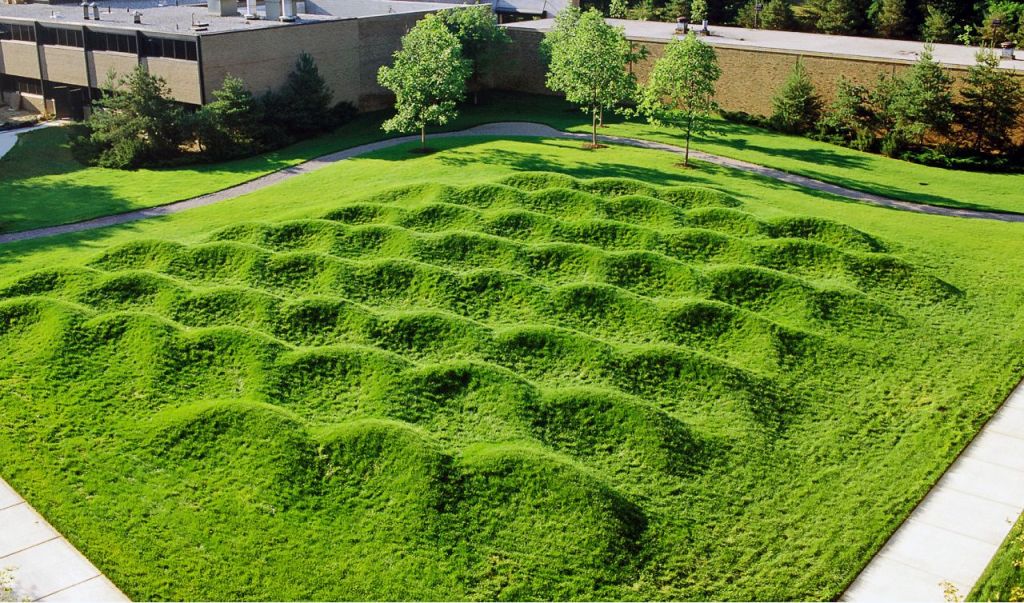
The Wave Fields by Maya Lin

However, this was not Lin’s only work, or the last time she would work by changing the environment. In 1995, Lin created The Wave Field, an outdoor sculptural installation which focuses on the fluidity of water. She studied the dynamics of fluid, aerodynamics, and turbulence in order to achieve the outcome she was seeking, which was to mimic the forms of a naturally occurring wave. She did this by altering the earth and grass to get this effect.

“Lin continues to look at the environment as she progresses as an artist,” writes Laura Fiesel. “She creates important installations that use elements of the natural world, always focusing on landscape.” She continues to make art and installations that do not rival Earth’s natural beauty, but that work with it.

Credits:

Fiesel, L. (n.d.). Maya Lin Biography, Life & Quotes. The Art Story. Retrieved May 3, 2022, from https://www.theartstory.org/artist/lin-maya/life-and-legacy/#nav

KLEINER, F. R. E. D. S. (2022). Gardner’s Art through the ages: A concise global history. CENGAGE LEARNING.

Torchinsky, R. (2022, May 2). The story behind Asian Pacific American Heritage, and why it’s celebrated in May. NPR. Retrieved May 3, 2022, from https://www.npr.org/2022/05/02/1095812576/aapi-asian-pacific-heritage-month-origin-may-why

Featured

Weezer Stan Breaks Down “OK Human” Part 2 of 4

To continue with our saga, we must look at the next song on the album, “Numbers.”

“Numbers” feels a lot like a classic Weezer ballad. The melody reminds me a lot of something that would come off of the Red album. The way Rivers shouts is in much resemblance of a Pinkerton song, but without the aggression behind it as you might would find in a Pinkerton song. The lyrics are very poetic and reaches the audience on a meaning that a lot of people today can understand.

According to genius.com, “Numbers is a song about every person’s discontent with their inadequacies and flaws, and how none of those things really matter as much as they’d like to think.” This can be supported by the lyrics “I’m a one, I’m a zero / In the end, does it matter? / All we even really know / Is every nail needs a hammer.” It also shows the feeling of incompetence as we as a society are constantly looking at the social lives of other people on social media, as shown by “Look at him, look at her, they’ve got a million likes.” In the end, it doesn’t matter how many likes a person gets. They are all just numbers, some not even really there. A lot of what we think about ourselves, when compared to other people, is all in our heads.

The next song is “Playing My Piano,” which is about the escapism Rivers Cuomo feels when he plays his piano. The song basically explains its meaning, as we see Cuomo neglect his everyday activities because he becomes so absorbed in playing his piano alone in his room. This song gives us as listeners an inside look at what Cuomo is like when writing his music: messy hair, drinking coffee, white-noise playing in the background, etc.

The thing about “Playing My Piano” is that is sounds so much like older Weezer. The melody reminds me a lot of something like Unspoken from the Hurley album or even “Unbreak My Heart” from Death to False Metal. The chorus, where we can find Cuomo belting out about playing his piano, is a lot like the chorus from “Unbreak My Heart.” The tonal range Cuomo has is phenomenal and this is one of the songs where we can really hear what he is capable of with both his writing and his vocals.

Up next on the album is “Mirror Image.” This song is very shorts, and acts as more of an interlude. It actually reminds me a lot of the interlude from the Sam’s Town album by The Killers, aptly named “Enterlude.” Both sing about heaven and being together, though they are focused on different people. While “Enterlude” focuses on being with the audience, “Mirror Image” is about Cuomo’s undying love for his wife and how they will always be together, and how he fears death for they won’t be together when they die.

The song is very sweet and, in my opinion, is unlike any Weezer song I have ever heard. It starts out strong and loud until it dies down into a soft outro, which could potentially be a metaphor for their life together. We see how passionate Cuomo is when it comes to his wife, elaborating that “she is my mirror image / showing me who I am,” as if Cuomo is incomplete without her around. It is definitely a personal favorite of mine.

So that concludes part 2. I hope everyone is enjoying breaking down, what I think is, the best Weezer album out there. Weezer never fails to make a good album, but every song on OK Human is a masterpiece.

Watch out for part 3 of 4 where we will discuss the next three tracks, coming next Tuesday!

Featured

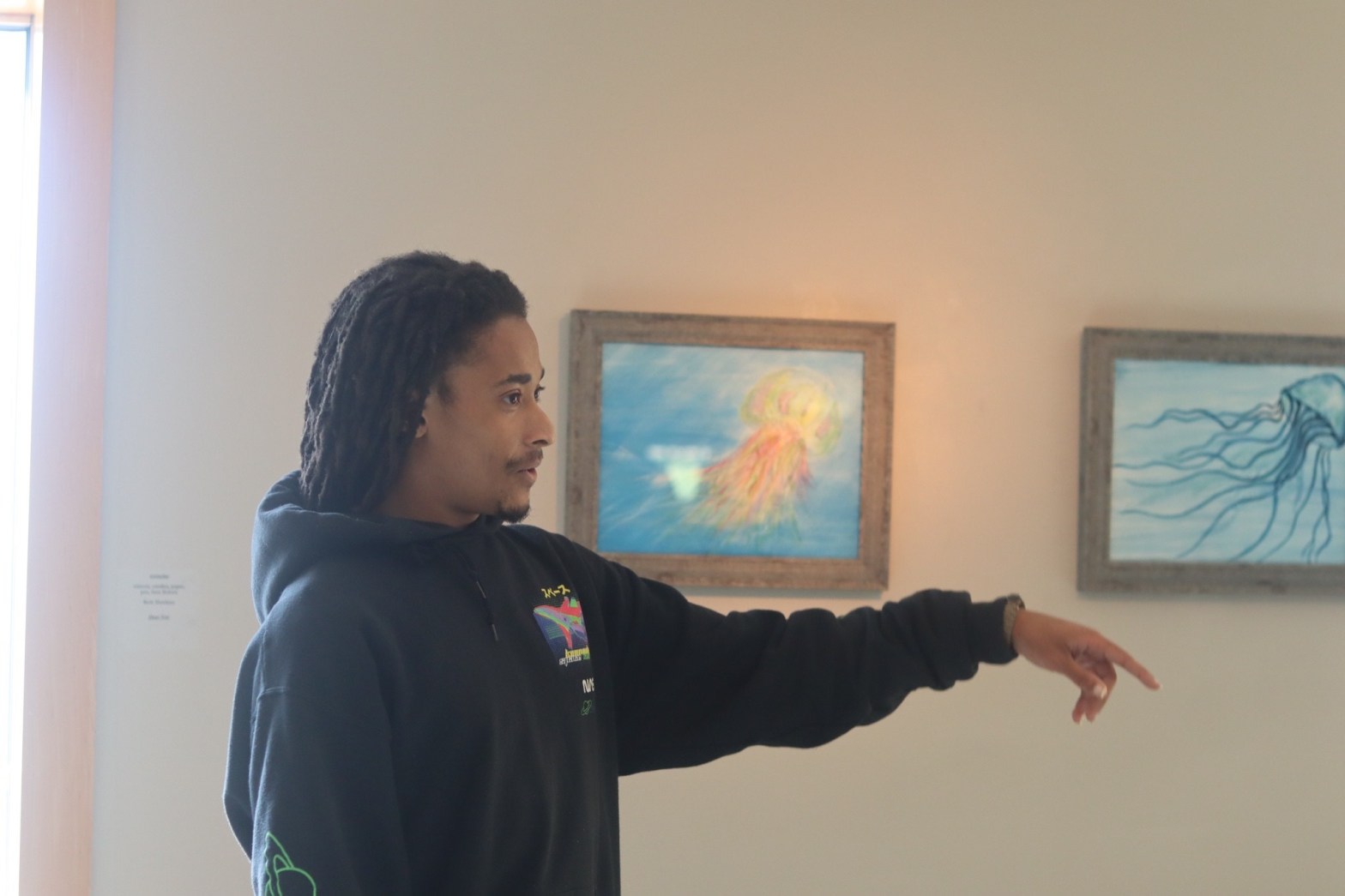
“Diving Into Planet Earth” by Jaylen Walker

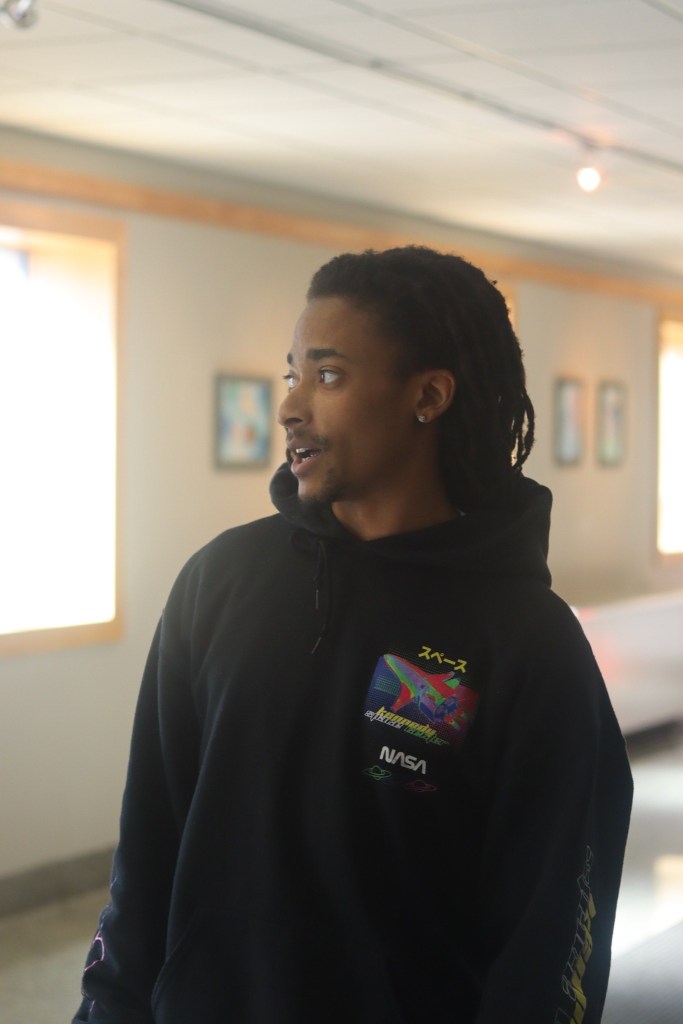
Jaylen Walker, photo by Destinee Allen

Greensboro College senior, Jaylen Walker, put up his senior exhibition on April 19th, 2022 in the Anne Rudd Gaylon Gallery in the Cowan Building at Greensboro College. The show will be up until May 7th.

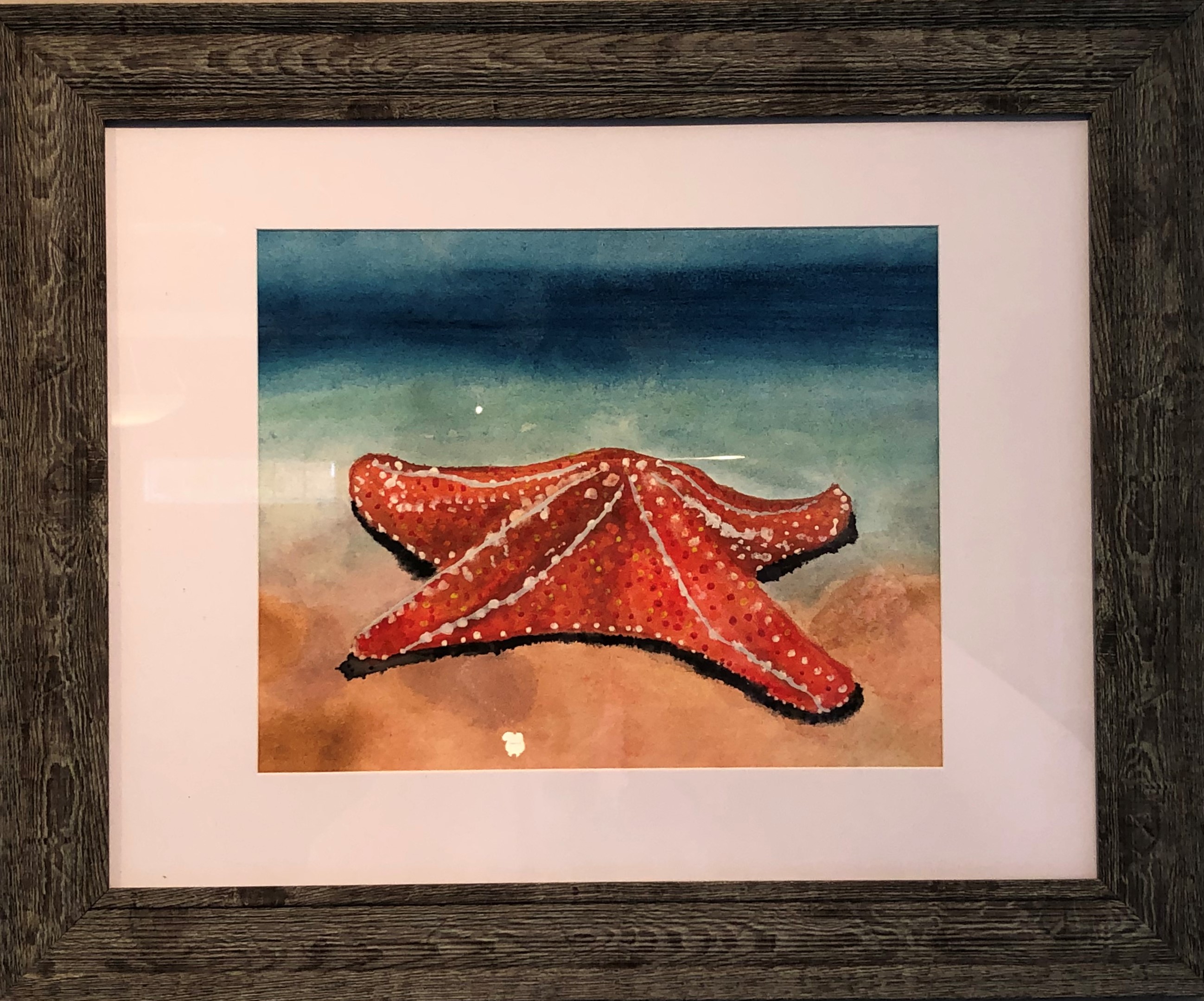
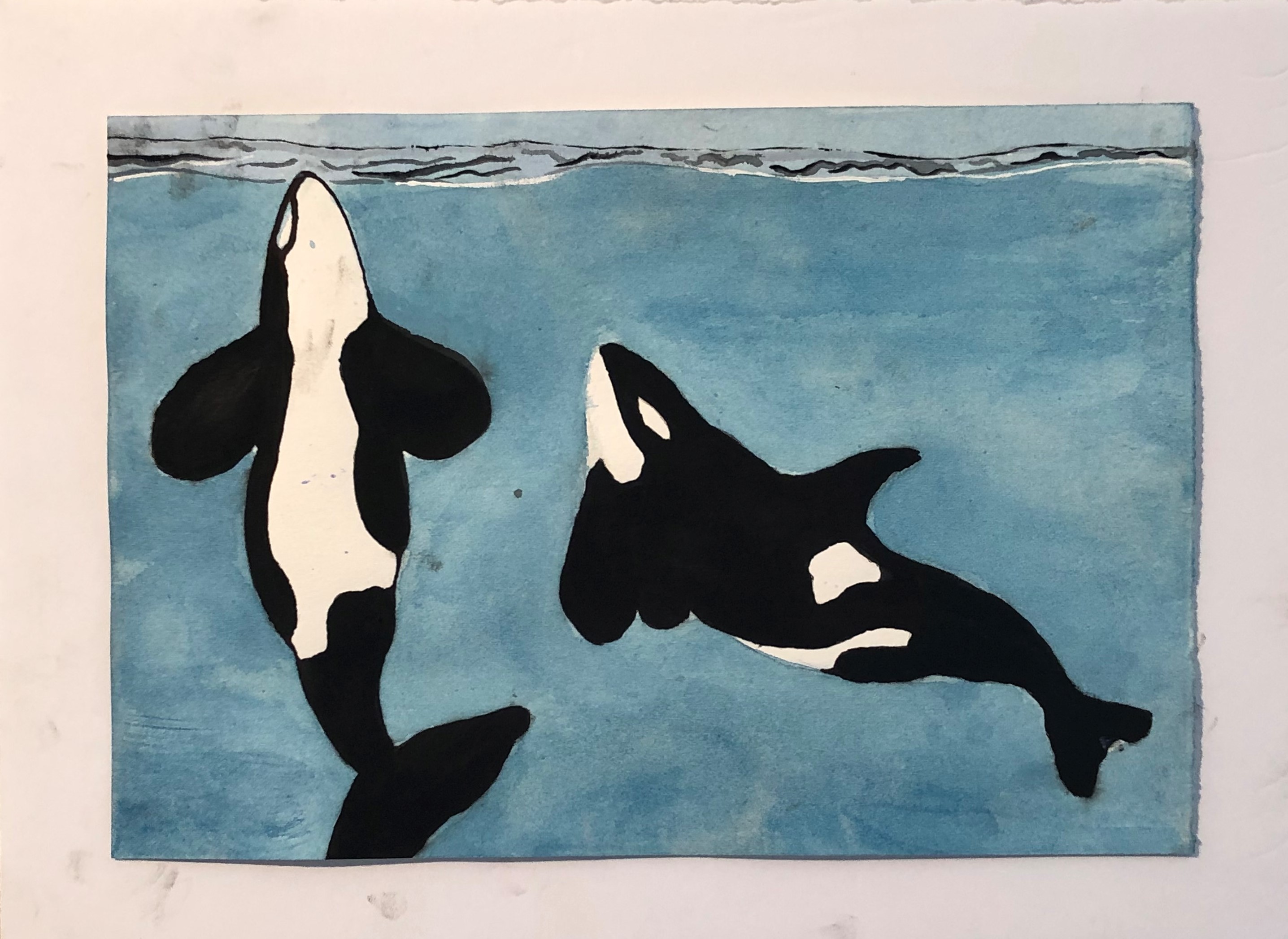
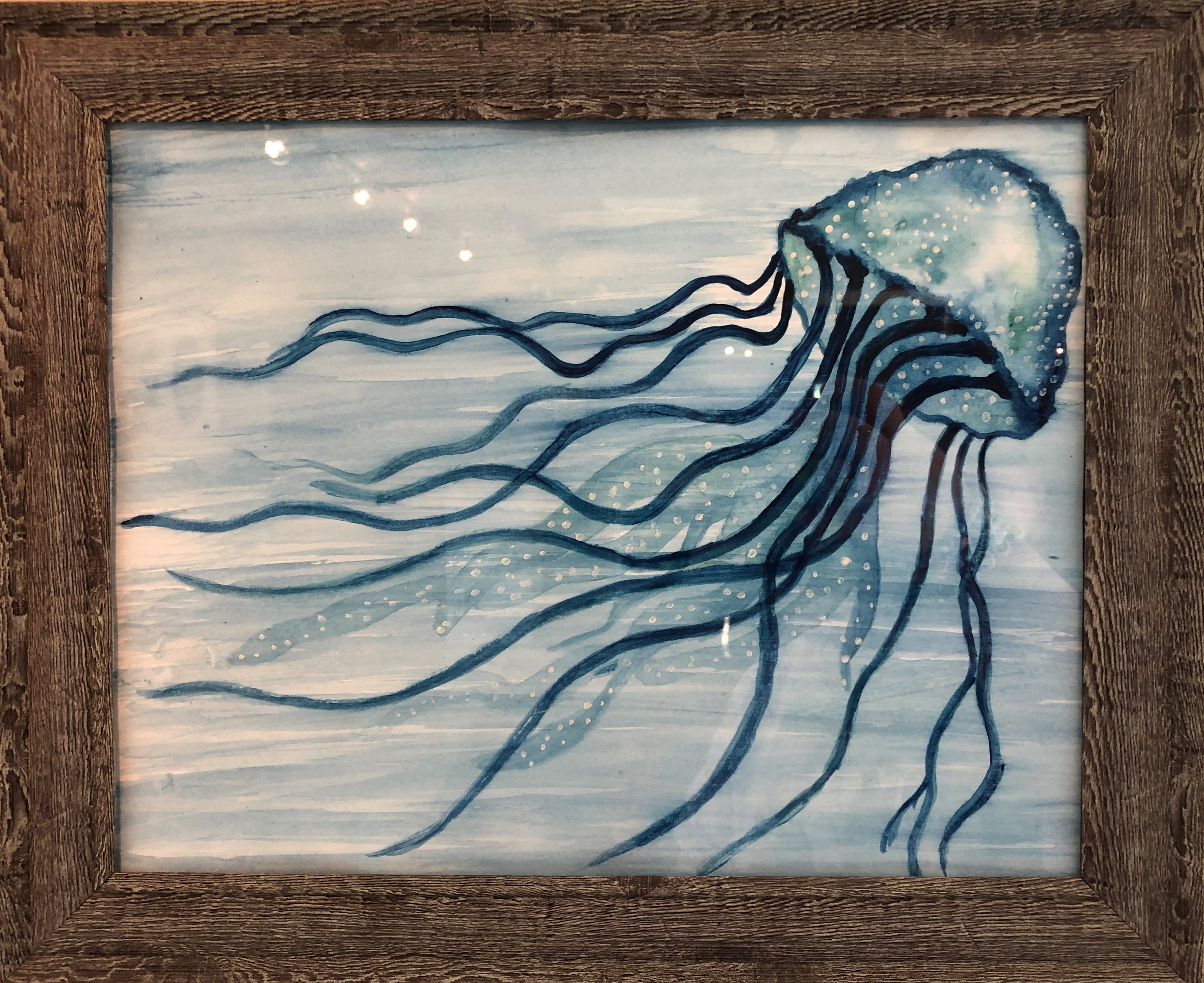
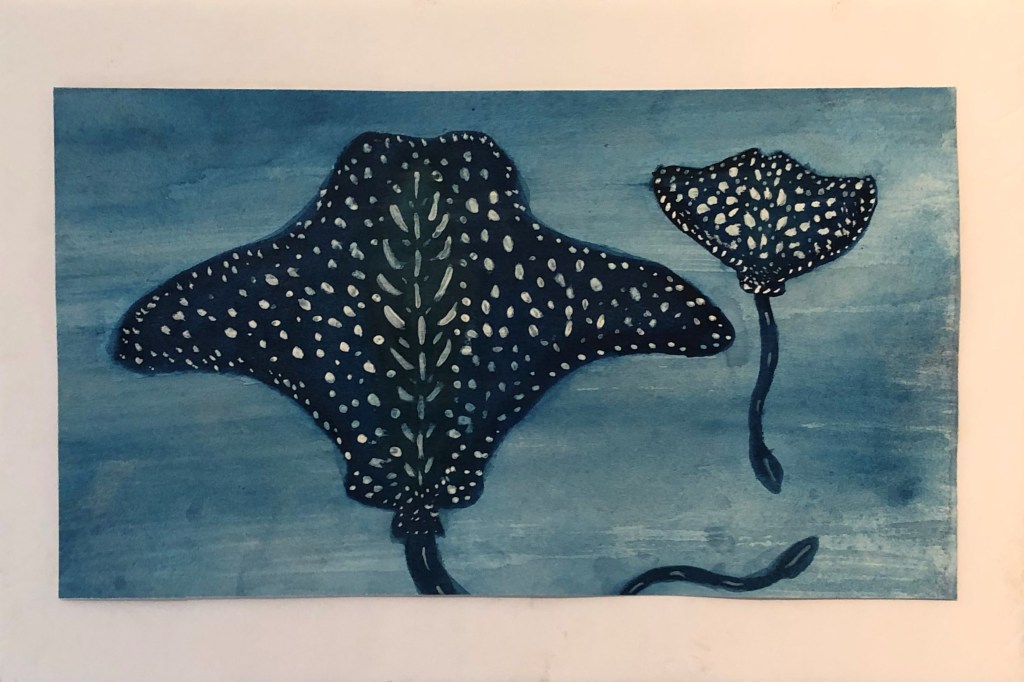
“Diving Into Planet Earth” shows audiences that Jaylen Walker represents “the ecosystem using [his] own newly learned artistic skills and knowledge of egg tempera and watercolor painting,” as stated in his artist statement. Walker elaborates in his statement on the effect of human wastes and neglect toward the planet earth and how we tend to forget that other creatures besides ourselves inhabit this planet. He depicts environmental awareness and practices using paint.

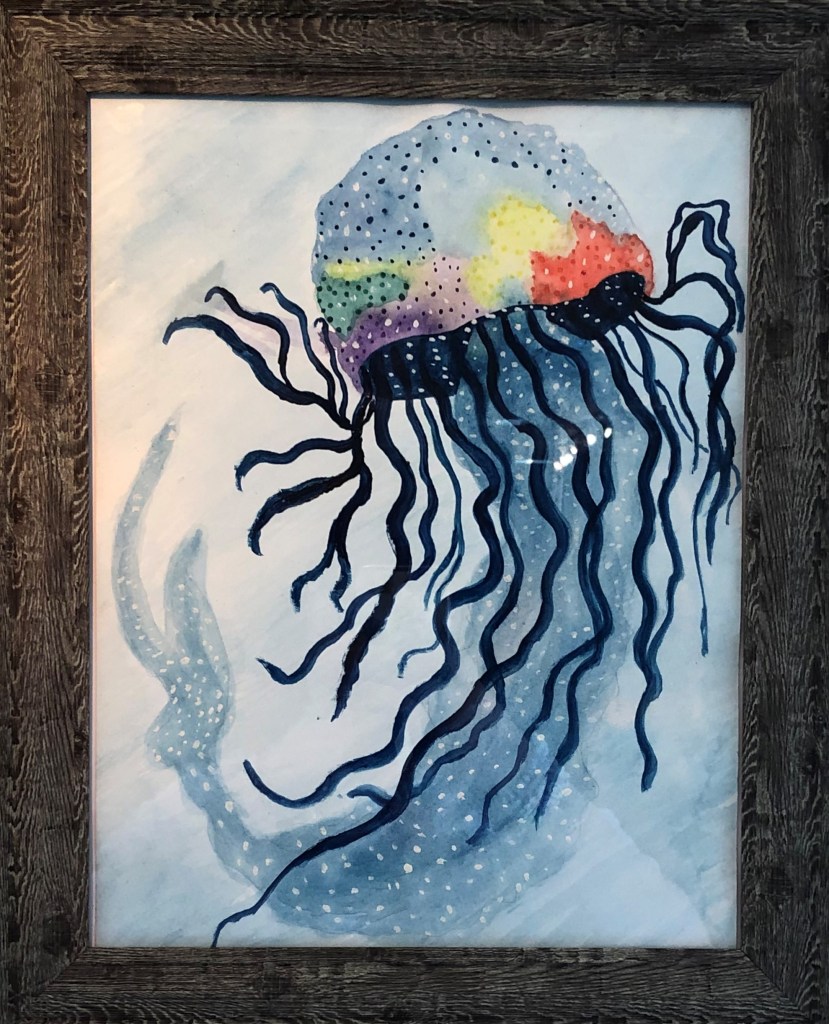
peak, watercolor and egg tempera

Walker used primarily egg tempera and watercolor. In his work. “jellyfish,” the layers were achieved by “working quickly and repeatedly going over a certain spot with the egg emulsion,” as stated. His works were also influenced by the psychoanalytic theories of sublimination as he began to notice repetition in his actions and thoughts.

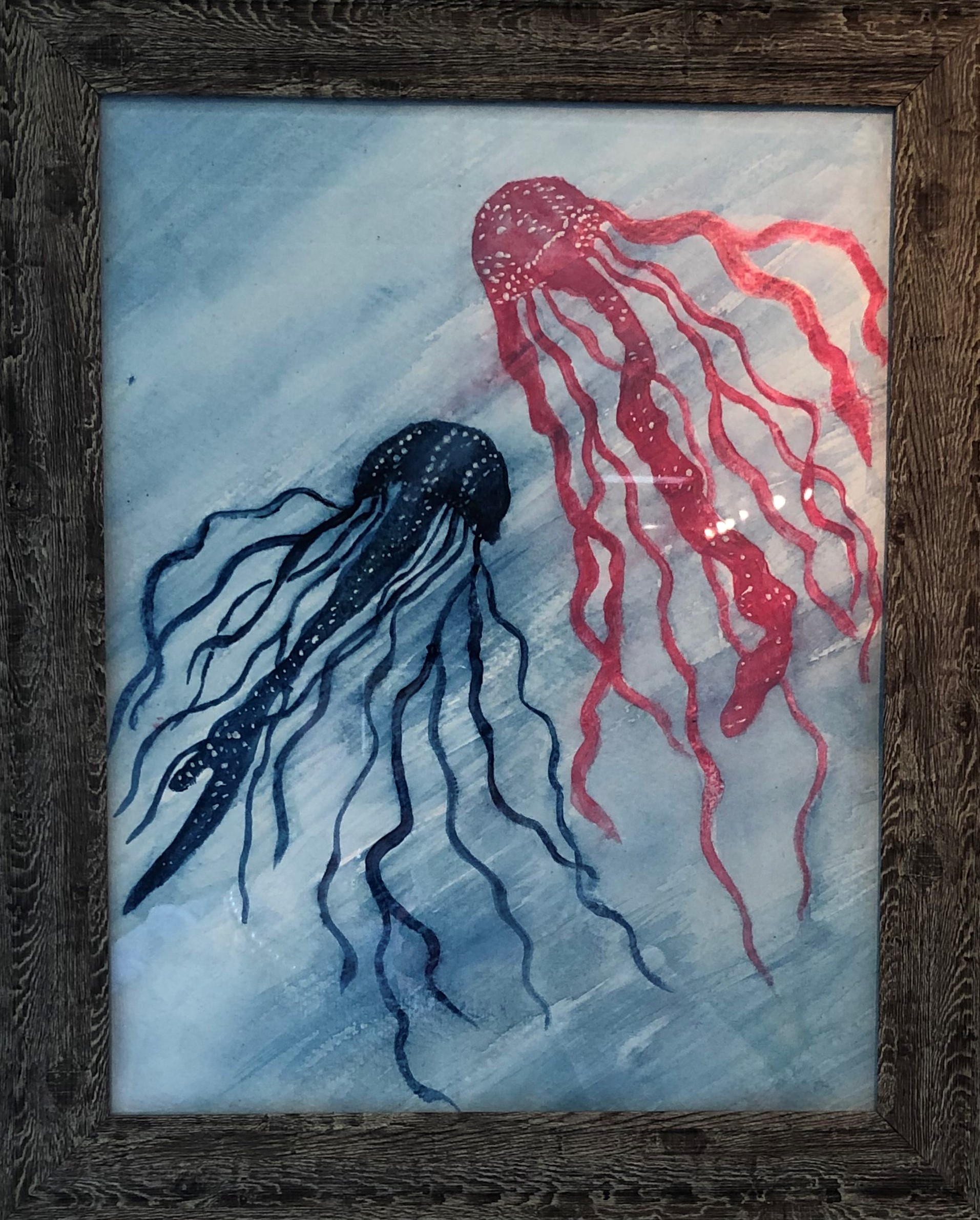
In his senior exhibition, Walker’s pieces consist of paintings of sea creatures such as jellyfish, rays, and orcas. Walker chose to paint sea creatures because, according to his artist statement, “sea creatures take the most impact within the forgotten studies of proper rules and respectful actions towards the ocean and planet earth.”

He states that he found a connection in his art to his own personal thoughts about the ecosystem and found that they were very similar to artist Maya Lin’s earthworks and how “she describes her attempts to integrate her work within each space and topography.” Because of this, most of her works are about being within nature or changing the environment in itself. For example, her wave field in Ann Arbor, Michigan, which is literally waves in a field of grass – so the environment itself has been changed.

together forever, watercolor and egg tempera

To learn more about Jaylen and his works, please visit the Anne Rudd Gaylon Gallery inside the Cowan building of Greensboro College!

Congratulations, Jaylen! Greensboro College will miss you dearly and we can not wait to see what the future holds for you and where you take your outstanding artistic abilities!

Featured image taken by Destinee Allen.

Featured

“Mind Your Manners” by Jonathan Abney

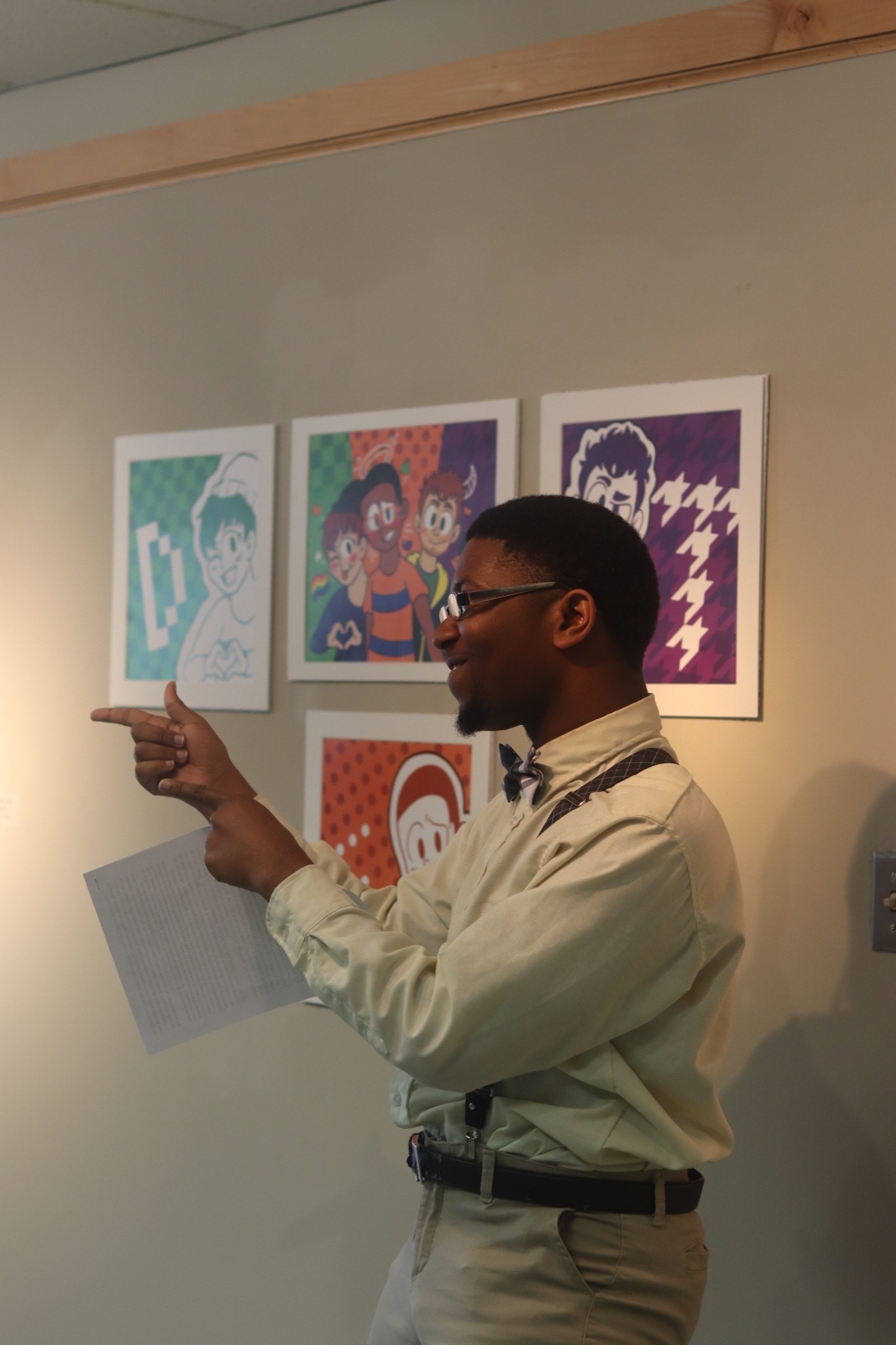
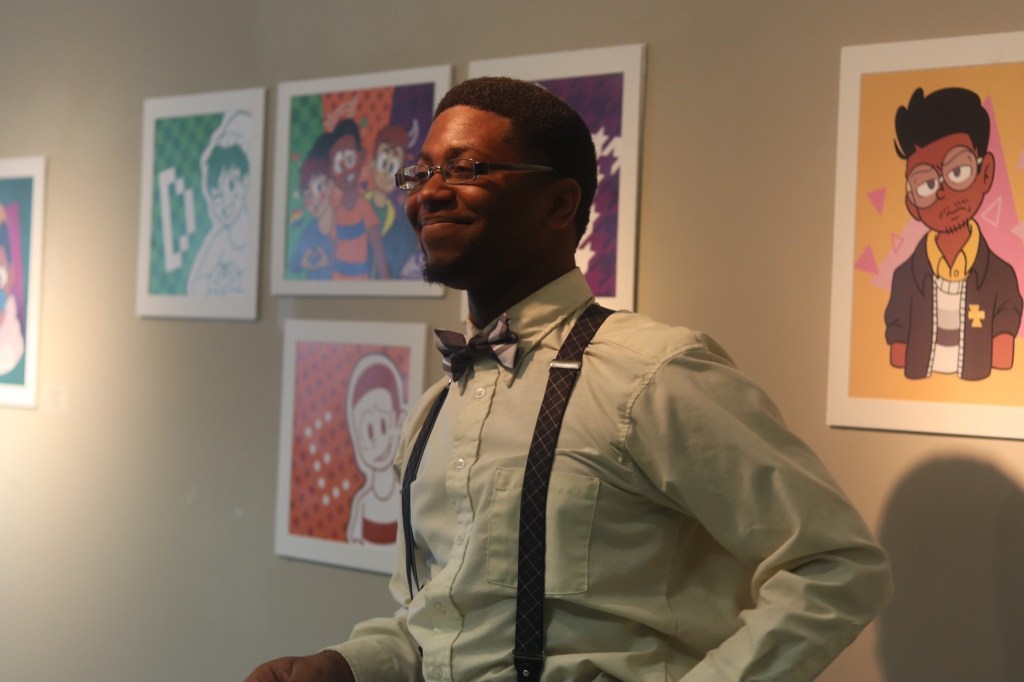
Greensboro College senior, Jonathan Abney, put up his senior exhibition on April 19th, 2022 in the Anne Rudd Gaylon Gallery at the Cowan building of Greensboro College. The show will be up until May 7th, 2022.

Jonathan Abney, Photo by Destinee Allen

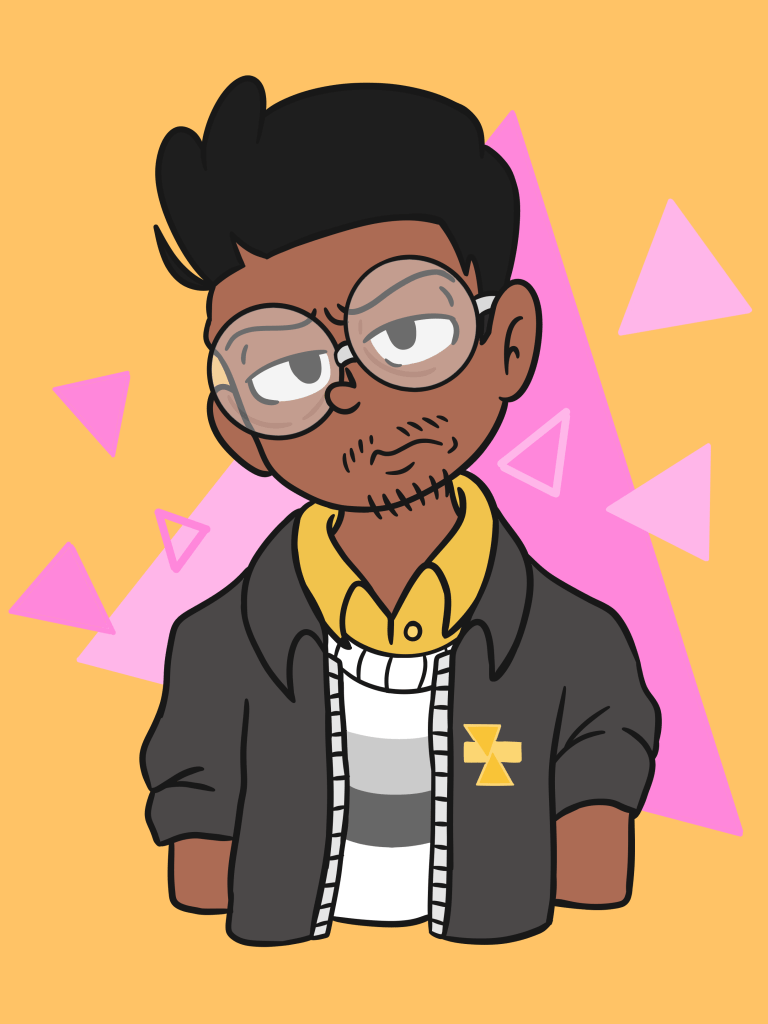
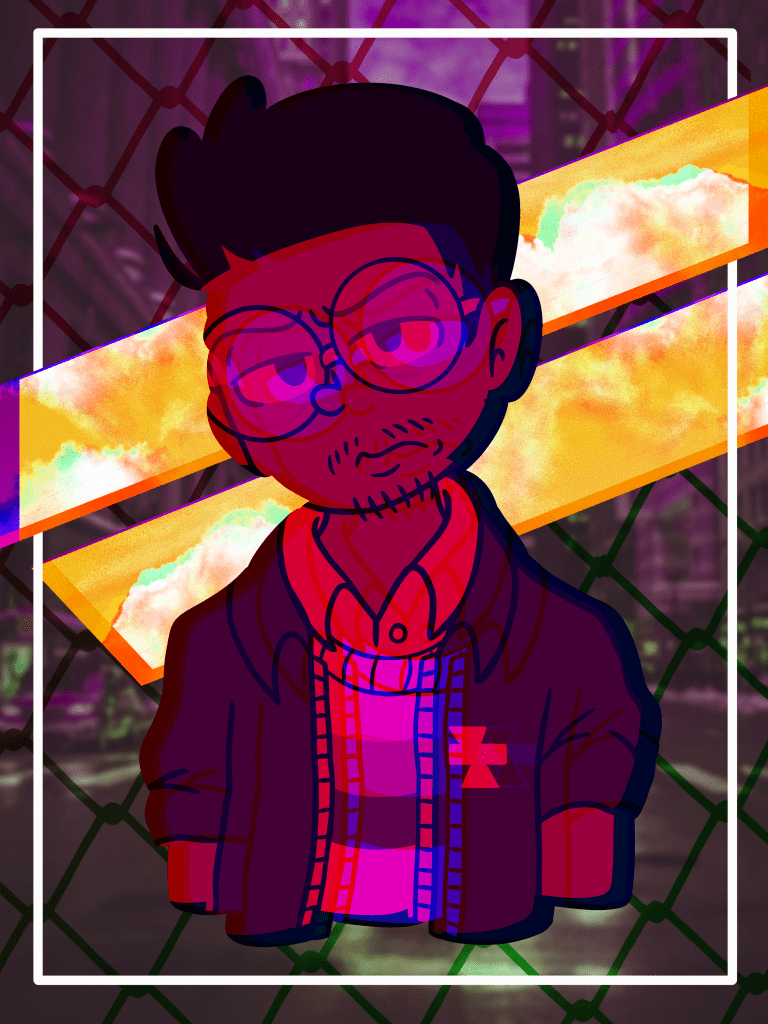
The name “Mind Your Manners” stems from Abney’s love of alliteration and from the idea of “minding your manners” being something that parents say to their misbehaving children. “My commonly known disregard for social norms is a trait most can probably recognize from the way I act publicly,” says Abney. “I feel as though I present myself as a very childlike and carefree individual, so it fit right in with what I wanted to display in the gallery.”

Student Speaks by Jonathan Abney

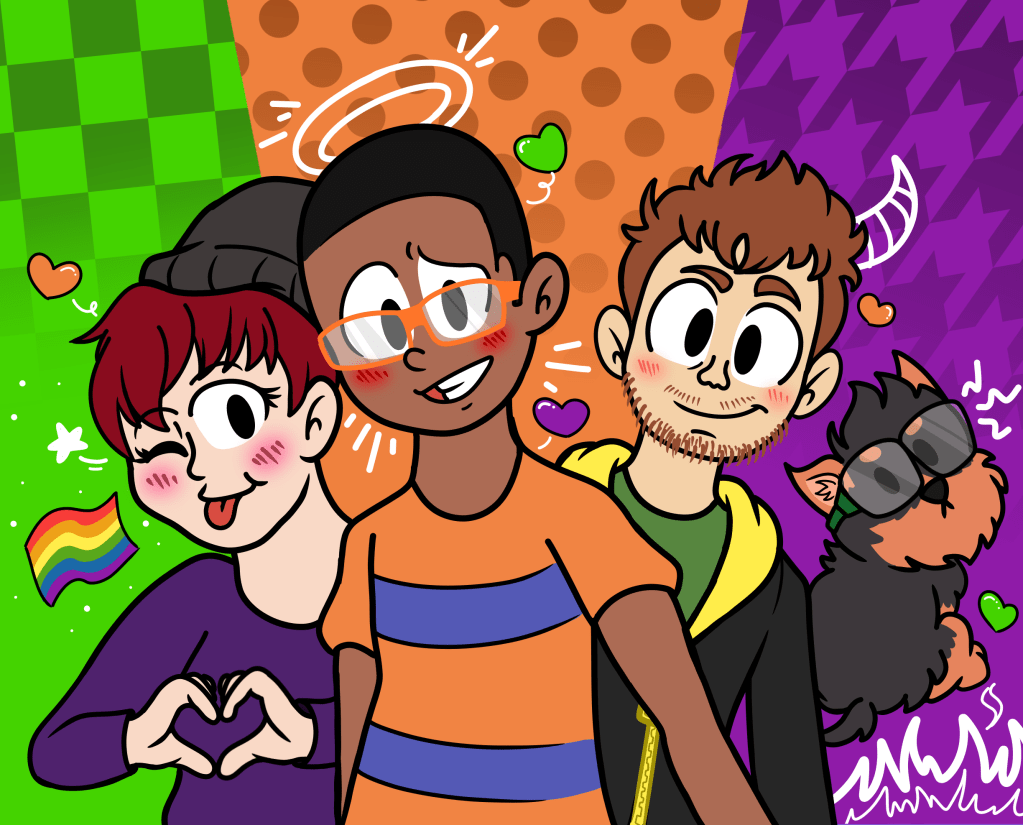
Abney’s show consists of both digital and traditional artworks, but mostly digital. His show consists of mostly self-portraits with the occasional piece of a friend or of characters he has made.

Abney found himself experimenting more this year with traditional pieces and seeking new horizons. “Traditionally being only an artist familiar with pencil sketching and inking, the distinct lack of variety within my artistic palette made me feel inadequate compared to my other more artistically gifted friends. Personally, it was impossible for me to believe myself to be a ‘real artist’. An artist who challenged themself past their arbitrary limits. And this interpretation led me to disregard what I had achieved.”

Solus Not Soulless by Jonathan Abney

According to Abney, his show has given him the opportunity to convey himself for himself. He found that painting with acrylic paint allowed him to work against its flow, rather than just making art with it. He found that working with the medium was not that he misunderstood it, but that he just misunderstood the process; something he has since learned to embrace.

To learn more about Abney and to see all of his works, please visit the Anne Rudd Gaylon Gallery inside the Cowan building of Greensboro College! Or visit Abney’s Instagram which will be linked below.

Congratulations Jonathan! Everyone here will miss you when you graduate and we can not wait to see what the future has in store for you and your fantastic art!

Check out Jonathan’s Instagram at https://www.instagram.com/jonnyjraws/

Featured Image by Destinee Allen.

Featured

Weezer Stan Breaks Down “OK Human” Part 1 of 4

On January 29th, 2021, the American rock band Weezer released their fourteenth album, “OK Human.” This album is hands down one of the best albums of our entire lives, and I am not just saying that as Weezer’s number one fan.

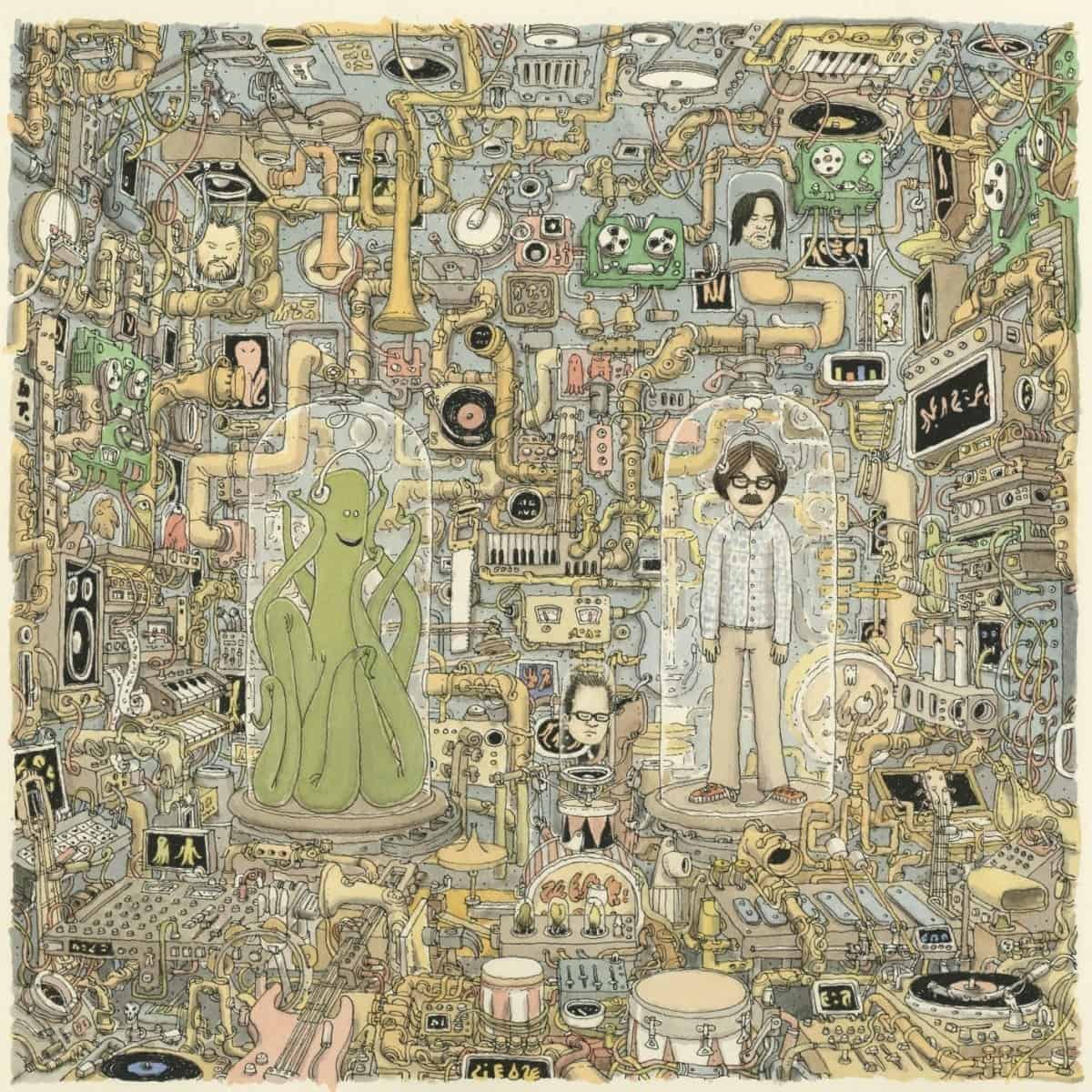
So, I am gonna break down every song on the album along with the album cover and tell you why everything about this album is so perfect.
The first song on this album is “All My Favorite Songs.” It starts out with this wonderful violin and lead singer’s, Rivers Cuomo’s, angelic voice lamenting about how all his favorite songs are slow and sad. This song is relatable on a whole other level for many people. Someone like my mom, who I joke with often about listening to the most depressing music, found this song to be one of her favorites from the album as she relates to Cuomo’s own music tastes. The song expresses a feeling of guilt in relation to personal feelings, as can be expressed by “I love parties, but I don’t go, then I feel bad when I stay home” and “I wanna be rich, but I feel guilty, I fall in love with everyone who hates me.” The feeling of guilt for not wanting to do anything, especially after being stuck in a pandemic for a year by this time, was all to real for many people and I think Cuomo really captured that in his lyrics. Not to mention that the rhythm of the song just flows so well with everything. I think choosing the violin as one of the main instruments for this song was a smart decision as it gives off that somber but very intellectual sound that you will find present in most of the songs on this album.

“Aloo Gobi” is the second song on the album. The ending of “All My Favorite Songs” continues into the beginning of this one, something that you will find repeated with every song as they all flow into each other in order of the album. “Aloo Gobi” expresses the feeling of not wanting to be around anyone and hating the “same old dull routines.” “Aloo Gobi” is actually and Indian dish made with potatoes and cauliflower, a dish which Cuomo and his wife Kyoko would eat as they find a movie to watch at their local Aero Theatre. Genius.com describes the song as “an ironic take on what Cuomo at the time saw as a boring, dull routine” but has now learned not to take those repetitive moments for granted as the quarantine has shut those moments out of his life during that time. Cuomo says, “when I wrote it, I was just so bored with my social life, but I really took it for granted. That’s all been obliterated now and I sure do miss it! The joke was on me.” This song taught me not to take those small moments for granted, some moments I can’t ever get back.

“Grapes of Wrath” is one of my personal favorites from the album. Each line tells a snippet from certain books such as Lord of the Rings and Moby Dick. The song is about Cuomo finding tranquility in audio books as if he is exploring whole new worlds. The title of the song refers to the 1939 John Steinbeck novel with the same name. The song stemmed from him unable to sleep one night, so he laid there listening to an audio book and the next day, went to write songs in a half-asleep daze, something he commented that people like Thomas Edison and Quincy Jones got their greatest ideas when they were also dozing off during work. The song gives this surreal feeling of escapism as we can picture exactly what is going on in Cuomo’s mind. The line, “Frodo jonesing for the ring,” gives us as listeners the exact replication of Frodo from Lord of the Rings and his desire for the ring by the end of the third book. Along with the violin playing in the background as I have stated before, the song feels very intellectual and like Cuomo knows exactly what he’s talking about.

There are 12 songs total on the album, so for each post I will talk about 3 songs. Expect part 2 of this saga to come out next Tuesday! Feel free to debate in the comments and talk about the album and the songs!

Featured

Facing the Faceless: Anna Leporskaya’s Faceless Painting Ruined After Security Guard Draws Faces On It

Anna Leporskaya’s “Three Figures” painting was on display during an abstract art exhibition at the Yeltsin Center in Yekaterinburg, Russia. The painting is of three faceless figures that are positioned to be facing the viewers.

The painting was ruined by a 60-year-old security guard on his first day on the job when he decided to take a ballpoint pen and draw eyes on the faces. He had said he was bored after his first day. The unnamed security guard has since been fired.

The painting, originally worth roughly $740,000, will costs roughly $2,470 to restore the painting. The Yeltsin Center confirmed that the painting will be restored easily and can be fixed without any consequences to the painting.

The company that hired the security guard is also allegedly going to be paying for the damages.

Featured

Artistically Speaking: Mario+Rabbids and Characterization

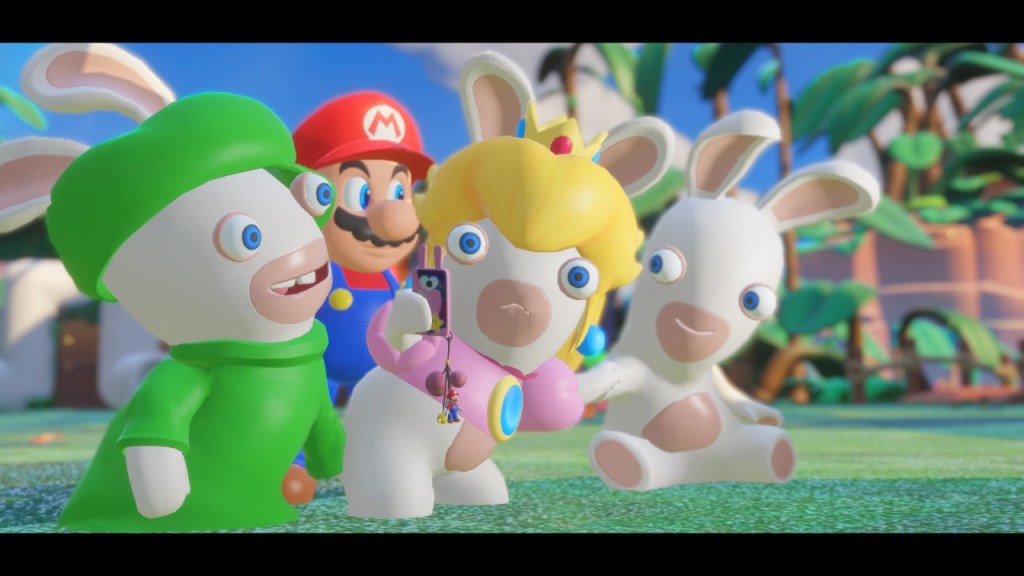
So recently, I’ve been trying to complete some video games on my Nintendo Switch to save space, and one game that I’ve decided to come back to was Mario + Rabbids: Kingdom Battle. I know, I know, the concept itself sounds pretty insane and don’t even get me started on the guns. But despite all of the abstract choices, THIS game has to be one of the most notable Mario games in the past century, and it wasn’t even developed by Nintendo. It was created by Ubisoft (and Ubisoft France respectively) as purely a game meant as a love letter to the Mario series. 

The first playable characters Mario, Rabbid Luigi, and Rabbid Peach looking towards an oncoming threat.

Regardless of where it came from, what makes this game so noteworthy? Well there’s plenty to talk about there but for today I think its biggest strength is its portrayal of the residents of the Mushroom Kingdom. Mario, Luigi, Peach, and Yoshi are main playable characters in the game, each with their own Rabbid counterpart who is also playable. And if you know those four characters, then you know how you’d expect them to act. Mario is a mainstay character, taking charge of any situations present with the utmost bravery. Luigi is entirely fearful of the situation that he’s in but still manages to put his foot down. Peach, while usually being kidnapped, is now fighting back with her own royal spunk. And Yoshi is willing to protect his home against any threats while spouting “Yoshiii!” gleefully. The ability of replicating personalities that perfectly fit these four who have not had much characterization in any of their mainline games is a feat in itself.

Mario, Rabbid Luigi, and Rabbid Peach celebrating their well deserved victory!
An awkward interruption occurs while Rabbid Peach is trying to take a photo.

But where the characterization really shines is in their Rabbid friends. They all are perfect dramatizations of their personalities and it’s ABSOLUTELY amazing! Take Rabbid Peach for example, the posterboy (or girl) of the game. She’s a sassy diva-like character who acts as if she’s got the world under her feet and is obsessed with her phone as much as she is with Mario. Her character makes for a very funny character to watch unfold as well as humorous just to see do anything. My favorite Rabbid has GOT to be Rabbid Yoshi, though. He acts completely primal and finds destruction to be a fun little game. 

What’s more is that you see this in characterization EVERYWHERE in the game, from the character menus, to their in-game animations. I remember this one moment in a boss battle where Rabbid Yoshi was captured and if I aimed at the boss who was holding him, Rabbid Yoshi would hold his hands up and I loved every second of it. It’s truly a gift knowing the Mario franchise and then seeing cute portrayals of these standard characters be given such life. And it’s not just about who these Rabbid characters are, but what these counterparts say about the originals that make it funnier. 

The team of Rabbid Mario, Rabbid Peach, and Mario discovering some treasure that gets added to the game’s gallery.
The victory screen after finishing a battle, with Rabbid Peach, Mario, and Rabbid Yoshi.

This game has been on my radar ever since I first heard about it, and while I was skeptical at first, it truly did surpass my expectations and I would recommend it to people who don’t usually play Mario games. It recently was announced that it would getting a sequel next year, so please, if you ever have the time, check this game out and play it. What I’ve talked about is just one small piece of the bigger pie here.

A special cutscene of the characters all together enjoying a job well done! (Spoilers… whoops…)

Featured

Artistically Speaking: The Lovely Art of “A Hat In Time”

Platformers are games where the main appeal is moving a character in a space to get through levels. In this sense, think Mario or Sonic, where the focus of one is his jumps and the other is his speed. Sounds pretty simple and can be but it can also be much more memorable than that. A Hat In Time is exactly that! Taking clear inspiration from platformers that came from the 90’s, it’s a journey where you move a small kid known as Hat Kid through many different worlds to get Time Pieces, for Hat Kid to get home. The game was made by a small company named “Gears for Breakfast” who got crowdfunded by fans of the genre and while usually games that go through that process don’t end up that well, Gears For Breakfast followed through with their plans! The game isn’t perfect but the personality of the game shines brightly like a diamond in the rough. Through the logo alone, you can tell it’ll be a journey to be had.

Hat Kid enjoying the sights of what looks to be a new adventure!

The goal of the game is to collect hourglasses known as “Time Pieces” to help Hat Kid get home. First, you go through Mafia Town, a small island that is overrun with big burly men who constantly refer to themselves as the “mafia”. Their design is based on mafia men in Italian culture, albeit a very goofy interpretation of them. They wear an apron, blue suits, sometimes a red tie and they’re bald. They don’t do much to stick out from one another which may very well be the point, ringing true to an actual mafia. But they are nice ways to incorporate what an enemy is to Hat Kid. They tend to only bully the residents and Hat Kid in small ways but also are admirable in their own way, attacking you when you’ve attacked them and are willing to talk to you in some cases. 

The title card of every level shows a bit of personality of Hat Kid and the situations she gets in to.

On the note of designs, Hat Kid’s is a very unique one. She wears a mostly purple attire which definitely helps differentiate her from other 3D Platformer mascots. A top hat with a coat, it has a distinct yellow cape and an oversized zipper, beige pants and little brown boots. If you weren’t really looking at her, it would all feel natural. But that’s the brilliant part, none of what she’s wearing feels out of place, despite her being a female. Often in cases like these, the main female character has a bow, a dress and other accessories that make her feel like a little girl. But Hat Kid feels comfortable to look at while not wearing traditionally known female clothing. And just like most of the other designs within this game, it portrays exactly who that character is. Like Mustache Girl for example, she’s a small girl in the game just like Hat Kid, which makes you feel safe but when she decides to fight against you for the rest of the game, you realize she’s the exact opposite of you. She has the same distinct yellow features as you but wears red to signify her more oppressive and rude undertones.

After the first boss, Hat Kid and Mustache Girl convene with one another as the Mafia runs away.


I’m only talking about the character design but I promise there is so much more to love about this game. From the worlds, to the music, to the even cuter details down the line, it all comes together all to help you love what many loved about older games before it. And I’m so happy this game is much more than just a homage. 

A little collage of stickers I collected of Hat Kid and me making her look like a worn out crazed old lady.

My Creative Hero 

by: Zeth Vejar

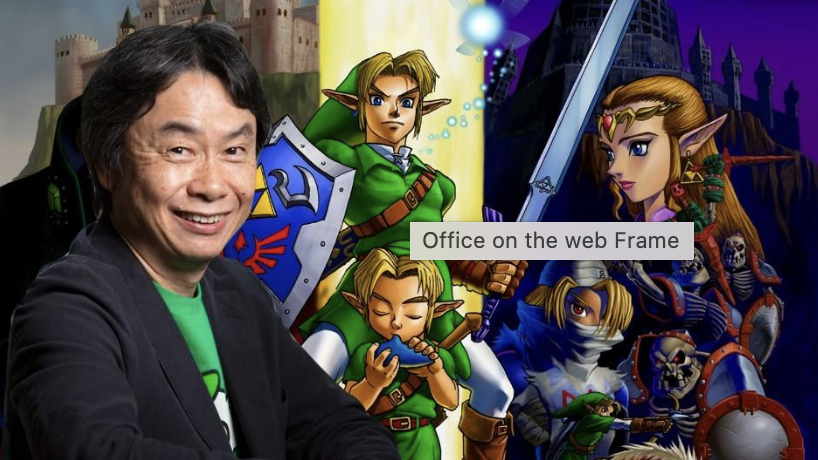
Shigeru Miyamoto 

“More than retiring, I think about the day I fall over.” -Shigeru Miyamoto. 

Shigeru Miyamoto is my personal Creative Hero specifically in character and game design. He created one of my favorite games of all time. The Legend of Zelda. Which also have multiple sequels to the game, with many characters of different designs and different stories of lore in each game that tie all together when you investigate and put time into the games in chronological order. 

Shigeru Miyamoto

Miyamoto studied industrial design in school, he wanted to be a comic & manga artist but he didn’t believe that he could compete with the other artists that were already at such “high quality” compared to himself. He also felt that way going into industrial design. As a video game designer, he found out that it was very similar to industrial design and it made him very nostalgic. Or in his words, “kept coming across all the things that I had loved when I was younger.” When he applied to Nintendo to become a designer they weren’t hiring for designers at the time instead, he was hired on as staff artist with help from his father.  

Not only did Miyamoto create games and character designs he also created some music for some games as well. He had his own image of how he wanted the Arcade version of Donkey Kong to sound so he decided to record it himself. He even used his experience in Industrial Design to create camera angles in his 2D and 3D games in order to create perspective that didn’t look too odd for the players.  

Turning Realty into Fiction 

“—we were trying to create worlds that people would want to immerse themselves in, the way you immerse yourself in a book or in a movie.” –Shigeru Miyamoto 

Game design at the time had turned from arcade games into world building and games where people could control their own character and create their own worlds. As he got older, he realized that he could take his own mundane experiences and implement them into the video games he created. He wanted to “turn those experiences into something that others could enjoy and experience. When he was younger, he got into hiking, as he was hiking, he stumbled upon a lake on top of a mountain, and it inspired him while working on the Legend of Zelda. He began taking experiences like that from childhood and started drawing them out for his games.  

“It’s a Trend and I try to avoid all trends.” Shigeru Miyamoto 

Once Miyamoto has an idea in mind, he isn’t faltered by criticism or feeling pressured to follow any popular gaming trends. When people had thought Donkey Kong would fail because of the “odd naming.” He thought of it as a good thing that it was unique. Miyamoto was asked about adding micro transactions into his mobile games and he declined saying “Everyone was saying I had to do it, but I’m the kind of person who doesn’t want to be told to do something because “that’s the way you do it.’ “ 

Hyrule Fantasy was going to be the name for the Zelda series, but it was scrapped due to Final Fantasy coming out around the same time, he didn’t want Zelda to look like a copycat.  

Inspiration from other media 

When creating the Mario and Donkey Kong game, he was inspired by the love triangle from Popeye, but without the rights to the characters, he decided to design his own.  

He took inspiration from fairy tales and the story of Alice in Wonderland when he created the idea of mushrooms creating a bigger Mario. He felt like it would make some sense that a mushroom would create that sort of power. When he made the first Zelda game for the Famicom console. Indiana Jones was popular at the time; he took inspiration from the movie and wanted to create a game that had both adventure and treasure hunting aspects to it.  

He is Player Focused  

Miyamoto creates games that people can immerse themselves in, he builds situations that they can respond to. “If I do this, what’ll happen.” When he created Mario he was made as a character for people to resonate with. “My vision of Mario has always been that he’s sort of representative of everyone.” –Miyamoto.  Which is why he was given jobs such as a carpenter and a plumber.  
It’s no wonder that many people see him as the “Walt Disney of Nintendo,” But as he says “I’m Miyamoto, Miyamoto is Miyamoto and Nintendo is Nintendo” He is his own person but to be he’s also a pretty cool dude who created a lot of my childhood. Which is why he’s my own personal inspiration when it comes to character design video games.  
Artist Appreciation| William Nemitoff 

by: Zeth Vejar

The Sea Turtle 

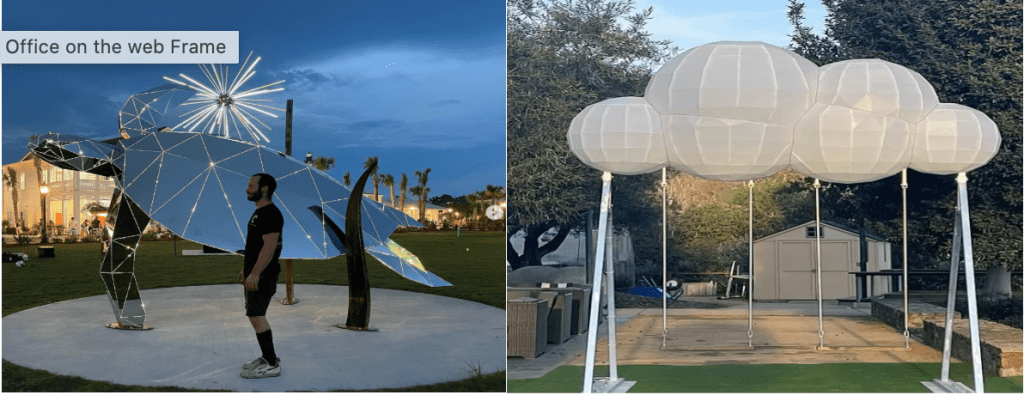
Around my birthday I took a trip with my mom to Myrtle Beach in South Carolina. We went to a place called Broadway at the Beach and I saw this big glass looking turtle, I thought it looked pretty cool and so I decided to look around to see if there was an artist name anywhere as there usually would be. And I saw a nametag screwed onto a tree with the name “William Nemitoff” along with an Instagram. So I looked it up and found this guy who made some cool designs that looked similar to this one.  

William Nemitoff with the Myrtle Turtle 

William Nemitoff has a site called Curious Form which is an art studio that he owns that creates large scale interactive art, Although the Sea turtle isn’t as interactive with the public he has plenty of sculptures and installations that have been featured internationally that are far more popular with the public due to the engagement and interaction. On his Instagram @curiousform he shows both the finished products of his sculptures and his design process along with explanations in his captions of what was used and his overall ideas.  

Another one of his works that I enjoyed seeing were his cloud swings, I thought they were pretty cool and he has a few placed in different parts of the world. Overall, although popular in many places I had no idea he existed and I think it’s cool that I found an artist I was interested in while on a casual trip.  

Female Artists in Feminist Theory 

by: Zeth Vejar

Sofonisba Anguissola  

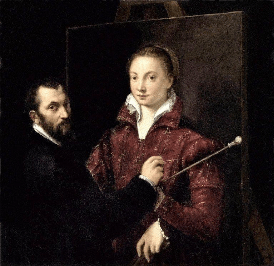
During the Renaissance women were forbidden to be apprentices to master artists. But many female artists bypassed that rule by having fathers who were also artists and trained with them instead. Sofonisba though was sent by her father to study with other artists. During the Feminist movement of the 1970’s Sofonisba, who was once an unknown painter to most was rediscovered. Nina Relf, a feminist art critic wrote that Sofonisba “paved the way for many other female artists who would later follow in her footsteps.”  

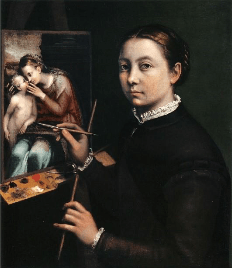
Sofonisba Anguissola Self portrait at the easel, 1556   Sofonisba Anguissola, Bernadino Campi Painting Sofia Anguissola, c.1550 

Sofonisba Paints herself as a “woman of virtue”, and in many of her paintings she identifies herself as “Virgo” Each of them consists of herself wearing a black dress and a white collar. “Sofonisba who regularly identified herself as a virgin in her signatures would have clearly identified herself with the Virgin Mary.” (Farber, Alan) In the painting of Bernadino Campi painting Sofonisba, he is shown painting Sofonisba, and looks out towards the viewer, which puts us in the perspective of Sofonisba. And because she’s painted it like this; She takes the roles of artist and subject and reverses them.  

Artemisa Gentileschi 

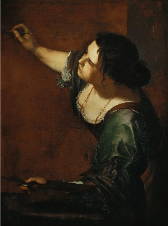
Due to her empowering depictions of women, she is seen as an important figure for feminist art and literature. And according to the National Gallery she is “The most celebrated female painter of the 17th Century” By naming her painting “Self-Portrait as the Allegory of painting” she self identifies as the female personification of painting. 

Self-Portrait as the Allegory of Painting, 1638-39 

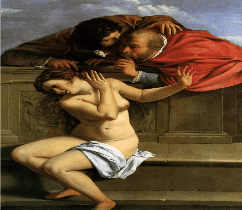
At 17 she was assaulted by a close friend of her fathers, and her tutor, Agostino Tassi, and betrayed by her female chaperone. This event influenced both her life and her career. I believe it also influenced her painting of Judith Slaying Holofernes. Both women play an active role in his beheading by forcing his head down and even the maid helping by holding him down. It seemed in a way what she would have wanted her female chaperone to do instead of idly standing by. Her painting of Susanna and the elders shows a vast difference to other paintings of the story. Susanna’s face looks annoyed and disgusted and looks as if she’s wanting to shove them away. Erica Reed wrote that Artemisa “emphasizes Susanna’s distress and active response.” 

Judith Slaying Holofernes 1620, (left), Susanna and the Elders. 1610 (right)  

Elisabeth Louise Vigée Le Brun 

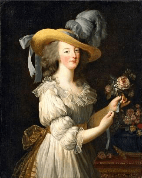
Elisabeth wrote that her mother thought her to be awkward and ugly, despite those words of discouragement she grew up to be very successful and became a court painter to Marie Antoinette creating over 30+ paintings of her. Although her talent was recognized by Marie Antoinette there were several that claimed “Monsieur Menageot finished her paintings for her” People were also saying that she must have attracted wealthy men to help her with her success.  

This particular painting of Marie Antoinette was highly controversial because they people felt like Marie had basically been drawn in her underwear.  

Marie Antoinete in a Chemise Dress, 1783. The Met Museum. 

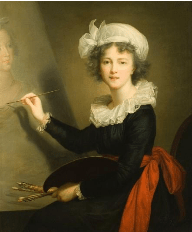
Elisabeth became a single mother leaving her husband and taking her daughter with her when she fled France due to being targeted for being associated with Marie Antoinette during the French Revolution.  

Self Portrait 1790 

Overwatch vs. Overwatch 2 – Differences in Design and Gameplay 

by: Zeth Vejar


Overwatch Gameplay 
 
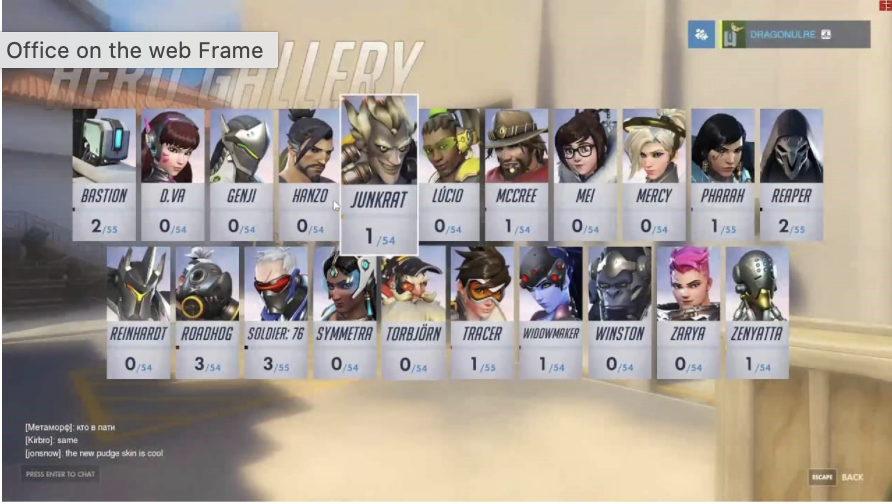
The gameplay of Overwatch into Overwatch 2 hasn’t changed too drastically since the revamp of the game was announced in 2019 and released in 2022. It began as a usual PVP game. Each team having 6 players on each team. Everyone on your team would choose from a set of 21 characters, players were able to choose between any role they would want. Tank, Support, or DPS. Usually there would be a 2-2-2 strategy. 2 tanks, 2 DPS, and 2 Support. But if you or the enemy team wanted to it was possible to have an all support team.  

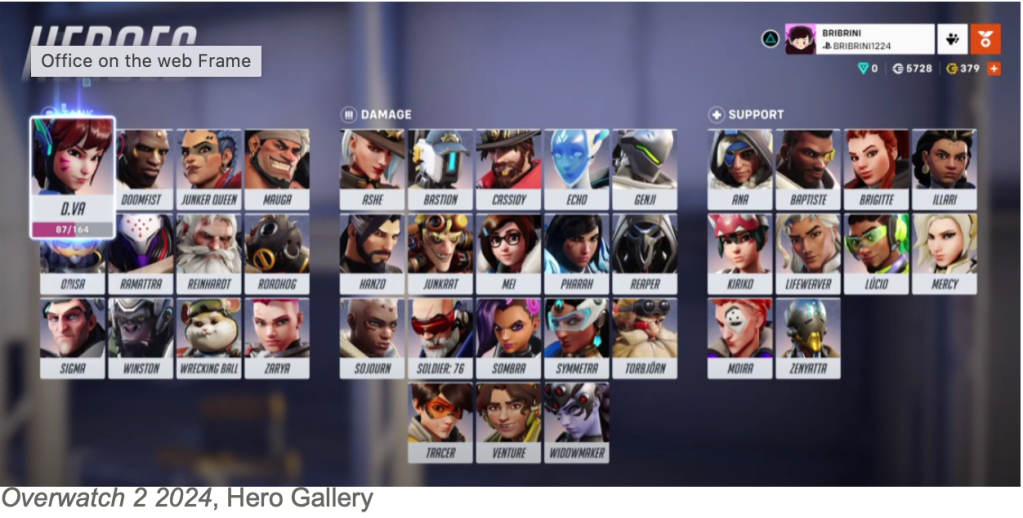
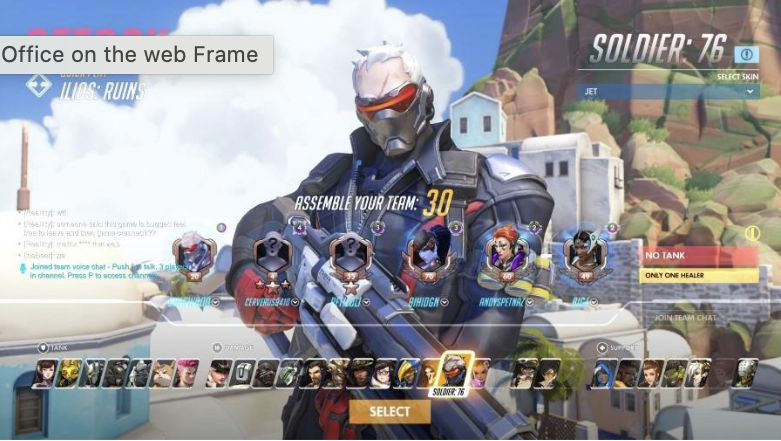
When Overwatch 2 was released, the PVP was lowered to 5v5 instead of 6v6 and there was a release of new characters on launch and they still continue to release characters within every new season of the game. The developers introduced role-locking in which you had to lock into a role and there could be only 1 tank, 2 DPS and 2 support, it was changed in this way in order to make gameplay fair and matchmaking much easier. Although you could find the original overwatch mode as a different arcade game mode rather than in the main selection. 

Overwatch and Overwatch 2 both also have a competitive game mode for the players who prefer a more competititve gameplay. Recently they’ve added hero bans which they newly implemented to invite players to get better with other characters in case the one they play gets banned, or ban certain characters to give them a higher chance of not playing against characters they are unaware how to counter.  

      Overwatch 2 2024, Hero Gallery 
  

Although Overwatch 2 is a now Free to Play game across most consoles, when Overwatch was first released in 2016, there were hardcopies of the game for the PlayStation 4 and the Xbox One which had to be paid for. Along with in-game purchases for character customization. Most purchases people were making in Overwatch are now able to be rewarded for free by just playing the game and earning lootboxes every week.  

Overwatch Design Changes 

There are a few major design changes when revamping Overwatch into Overwatch 2. The UI, The character designs, and the overall graphics within the game. Along with no longer contributing to the lore cinematics that they were making during the original Overwatch. A lot of these changes may have stemmed from having an entirely new design team during the development of Overwatch 2. This team gets a lot of mixed feedback from the players of the game and are forced to either constantly change the characters they are making or ignore their feedback and continue creating cosmetics that fit their personal liking. For example, a new hero they introduced having more newer cosmetics than the original characters. 

Game Aesthetics Changes 

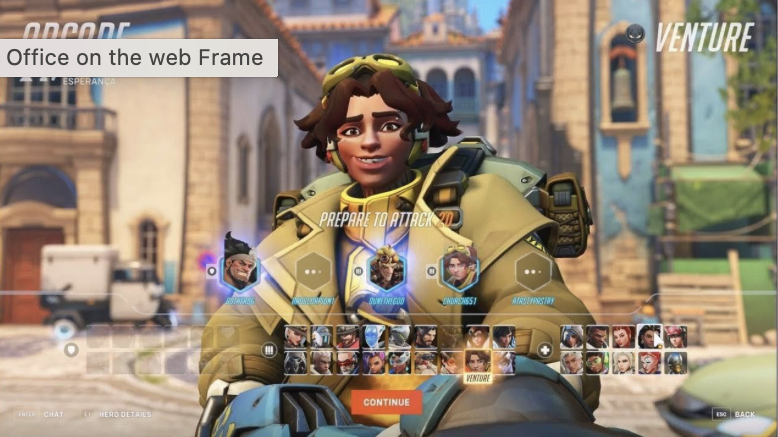
The graphics on the older character selection screen have a significant difference between original Overwatch and Overwatch 2. As a game that was usually played as a First Person Shooter, Overwatch 2 recently made an update in the game called Stadium. Where the player could choose between playing in 3rd Person or continue playing in 1st person in their UI settings. When revamping into Overwatch 2, each character had a revamp of their design but are still able to choose their older design as a cosmetic in their hero settings. I personally adore the new characters and the new designs for each character. Everyone looks much smoother and the animations that they’ve added look more interactive with the player selecting them.  

Overwatch Character selection Screen  

Overwatch 2 Character Selection screen 

Overall Thoughts 

When Overwatch was replaced by Overwatch 2, people were expecting a lot more differences in the game but weren’t met with any positive or newer changes in the game besides taking away and giving characters new abilities and newer designs, until now. Overwatch 2 as of 2025 with the new announcement of the stadium game mode, people are now reapproaching Overwatch 2 as it is. A sequel/replacement of the game rather than a remake of the original. 

Graffiti: A Controversial Art Form Explained

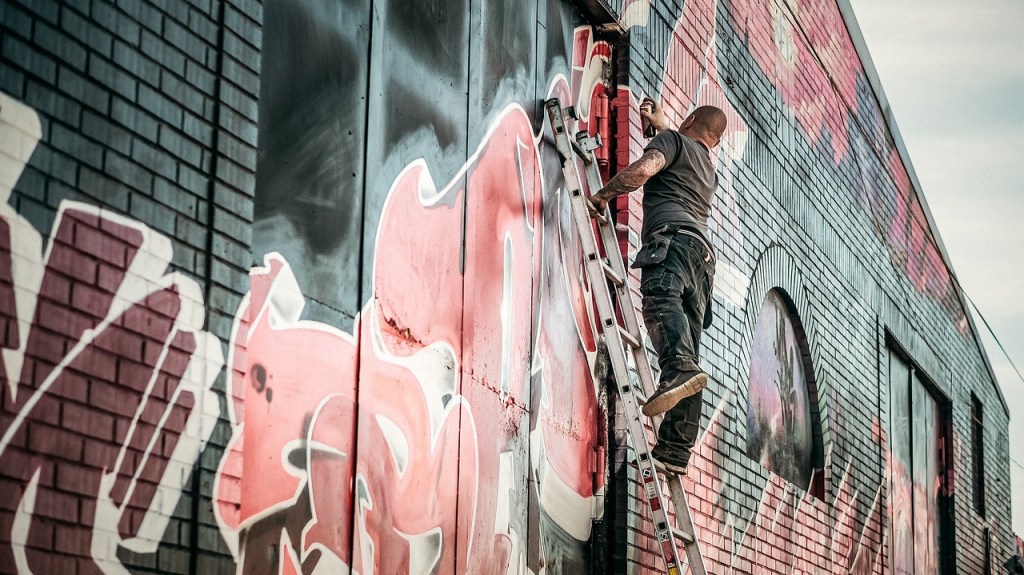
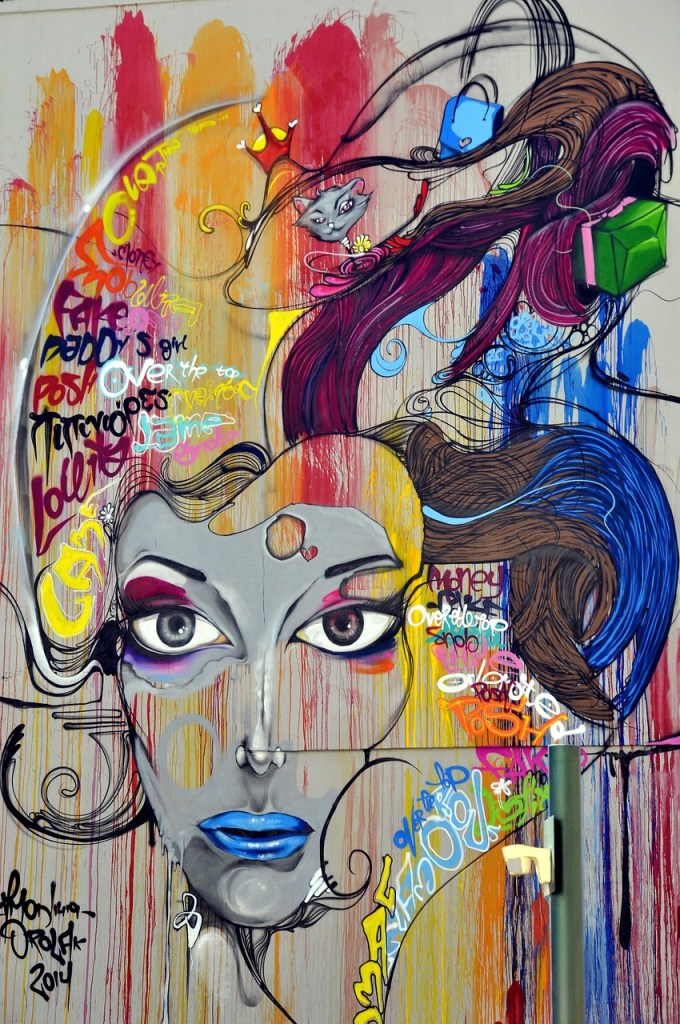
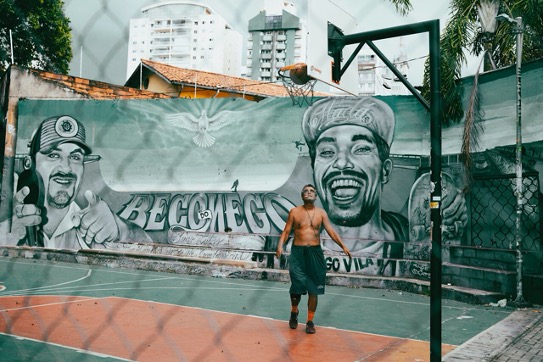
Graffiti can be created in many different ways ranging from simple symbols and lettering to elaborate wall murals. It is such a unique form of creating artwork and is an art style that faces a lot of scrutiny. In most countries, it is seen as an act of vandalism. From the method to the message, graffiti art is one of the most controversial ways of creating art. In this article we take a look at graffiti art’s history and the interesting duality it holds in different communities.    

What is Graffiti?

Graffiti is more than just spray paint on a wall. The term “graffiti” comes from the Greek word “graphein” which means to scratch, draw, or write. This style of art can be described as an artistic expression of identity and an outlet for creativity, to create social connections and celebrate achievements. It also allows people to transform different areas into spaces of empowerment and a place to congregate. One of graffiti’s core foundations are that it pushes the boundaries of conventional aesthetics and political expression.

But that’s not it’s only purpose. They can become a cultural and historical map for a city! For example, in East Los Angeles, Mexican American’s artistic influence began with Pachuco counterculture back in the 1940’s.  These early origins allowed Mexican American graffiti to establish a rich cultural and artistic traditions. It encourages us to see different viewpoints in a much different way than traditional art because of the tools needed, environmental parameters, and time restraints. Simple tags turned into large, colorful, and elaborate pieces that could take up the length of subway cars!

Graffiti’s History

The origins of graffiti can be traced back to different ancient societies. Wall etches are found in countries like Egypt, Greece and Rome and these etches communicate a multitude of subjects from everyday life to political events and propaganda. During World War II, soldiers drew their own graffiti called Kilroy. Kilroy was a simple drawing of a bald man with a large nose peeking over a ledge. This simple graffiti would connect and motivate their fellow man. In the United States, graffiti had an evolution during the mid 20th century, seen in New York and Philadelphia.

 Street walls became dynamic canvases using unique language codes and symbols to make an anonymous statement about socioeconomic limitations and racial realties. Early graffiti artists were called taggers or writers and all of them shared a common goal of having their work seen by as many people as possible. Graffiti art began to develop separately from the traditional, institutionalized art forms, creating a new world art with its own unique style, aesthetics, and technique.

Graffiti’s Duality

So, what’s the problem? Why is graffiti so controversial? Graffiti holds two contronym meanings. It straddles the line of between being seen as an act of vandalism and street art that is a product of the culture around it. Some see graffiti as street art that tackles important issues while others see graffiti as a vandalism crime that devalues the community.  Contemporary graffiti’s own controversial nature is not the problem but the way it is produced can become an issue. Some artists will make their artwork on public or private properties without first gaining the permission of the property holder.

 Some artists even use their arrest and charges associated with the art to elevate their own careers. Places like Central Los Angeles and East Los Angelos are more likely to criminalize graffiti because of it’s associate on with gang activity. On the positive side, this street art can represent society’s pulse and sentiments, channeling marginalized voices and sparking conversations with each piece. Graffiti is more likely to be recognized as artwork if it is made in an art district where they are labeled as beautification projects.

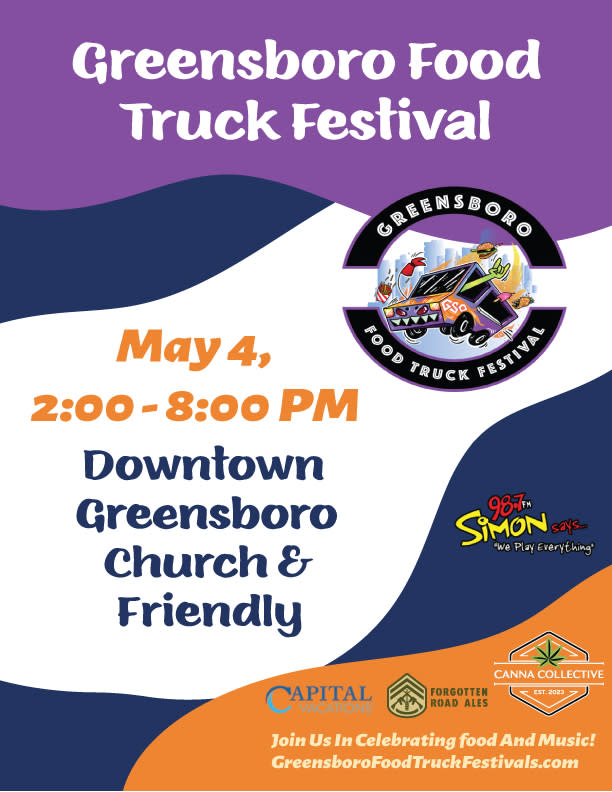
LOCAL EVENT: The Greensboro Food Truck Festival!

Come and celebrate the end of the semester by going to Greensboro’s Food Truck Festival! This will be the 14th year of the festival, and over 50 trucks will line Church St. and Friendly Ave! Not only will be there be activities at the history museum but you can enjoy the music, see craft vendors and enjoy craft beer! (21 or over if you want that alcohol, otherwise you’re drinking juice).

When/Where: May 4th, 2025 from 2:00pm-8:00pm! Church St. and Friendly Avenue, Greensboro NC.

Prices: FREE

Link: https://www.downtowngreensboro.org/event/greensboro-food-truck-festival/7256/

SOURCES

 Colombini, A. (2018, December 2). The duality of graffiti: Is it vandalism or art?. CeROArt. Conservation, exposition, Restauration d’Objets d’Art. https://journals.openedition.org/ceroart/5745 

Flair, C. (2024, January 10). Uncovering the societal impact of graffiti – creative flair blog. Creative Flair Blog – Hub of creative reads, news, insights. https://blog.creativeflair.org/uncovering-the-societal-impact-of-graffiti/ 

Soergel , A. A. (2021, September 14). The writing on the wall: Exploring the cultural value of graffiti and street art. UC Santa Cruz News. https://news.ucsc.edu/2021/09/graffiti-street-art.html 

Street and graffiti art movement overview. The Art Story. (n.d.). https://www.theartstory.org/movement/street-art/ 

How Emotions Influence Artistic Expression

For as long as we can remember, art has always had some form of emotion behind it. Movies and paintings have been known for drawing emotions out of an audience for a multitude of reasons. Art and emotions have shared a close and personal relationship with each other but it’s almost mysterious how artist is able to pull these emotions. In this article we analyze what emotions are and how they have enhanced not only famous artwork, but the benefits people can gain from making their own self expressive art.

What are Emotions?

Most peopleve felt an emotion before. Happiness, sadness, anger, excitement, it’s what makes us human after all. But what exactly is an emotion? Emotions can be described as different mental states that are a reaction to the way we interact with the world and/or our surroundings. For example, fear is a mental state that responds to an object or animal’s dangerous nature. In artwork like landscape paintings, and music suspend our beliefs in order to make our moods more compatible with what the art’s content provides.

Something like music can symbolize and associate itself to a listener’s memories which invokes a response. They can be felt, experienced, and expressed with different levels of intensity like getting really excited for an amusement park or becoming overwhelmed with grief when you lose someone special. The emotion itself is not negative, but it can create a positive or negative experience.

Artists Using Emotion

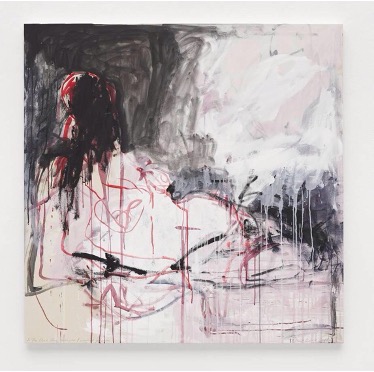
Artwork #1: In The Dead Dark of Night I Wanted You by Tracey Emin in 2018

Emin depicts a nude woman with their attacked by angry slashes of black paint. When you first look at this picture, you can feel a sense of danger, fear, anger, and discomfort. Emin layers her composition similarity to how emotions and experiences are complexed. The remnants of anger from a fit of her rage seen with the aggressive brushstrokes and red drips representing a bloody scene. These marks build and surround the figure, invoking drama and the feeling of ferocity.

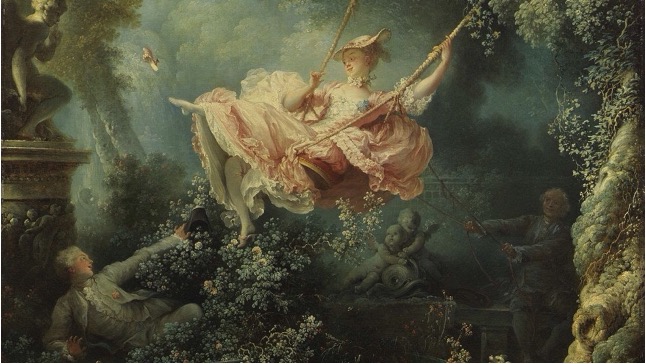
Artwork #2: The Swing by Jean Honore Fragonard in 1767

Fragonard depicts a young woman in a billowing, ruffled, ballet pink dress on a swing in a forest. It’s surface level expresses a fun and over the top romantic scene. The natural forest and color palette of the piece helps lean the modern audience into the sense of romance. This piece however is full of salacious undertones, representing a man and his mistress with implications of a sex act between the woman and the men depicted. That undertone can also invoke feelings of discomfort and coyness.

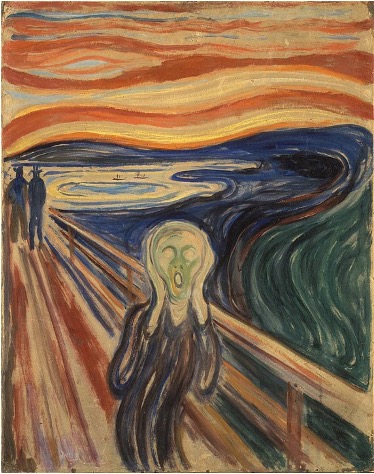
Artwork #3: The Scream by Edvard Munch in 1895

This particular piece by Munch encapsulates dread, worry and anxiety. It shows us a man walking ahead of two people with his hands over his ears. Munch states that this was painted in response to a walk he went on with his friends. The artist stated that he could feel the sensation of nature screaming around him. The figure itself is not screaming but it is attempting to block out nature’s screams.


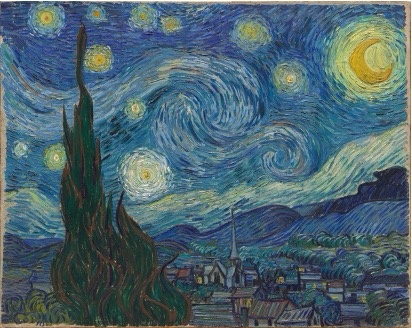
Artwork #4: The Starry Night by Vincent Van Gogh in 1889

This famous art piece shows us a beautiful swirling blue sky with large yellow stars and a small village nestled in the background with a large cypress tree in the foreground. This beautiful picture can leave an audience feeling calm but also sad and melancholic. Not only does the dark cypress tree represents mourning and death but others interpret the piece as an aspect of Van Gogh’s mental decline and depressed emotional state.

 Emotional Self Expression in Art

In order for our emotions to move through us freely, they have to be accepted and expressed. Many of us can accept how we feel but it can be much harder to express that emotion in a healthy way. Self-expressive art allows you to create and dig deep to ask yourself important, critical questions. It allows you to open up and bare yourself through creative expression.  You can gain valuable insight into your own logic patterns and reasonings behind certain actions.

 It can also create something that is a reflection yourself and allow you to feel your emotions fully and completely. A subject matter the artist recreates can influence the audience to go on an emotional journey with the artist.  Self-Expressive art doesn’t rely on rigid art rules or years of art experience, it only requires that you create spontaneously. Don’t be discouraged if you make a mistake, failure is one of the best ways to learn but what’s important is allowing that creativity to flow.

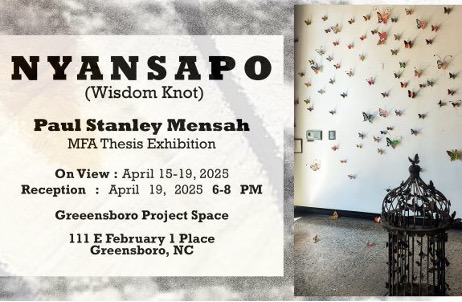
LOCAL EVENT: The Wisdom Knot Exhibit

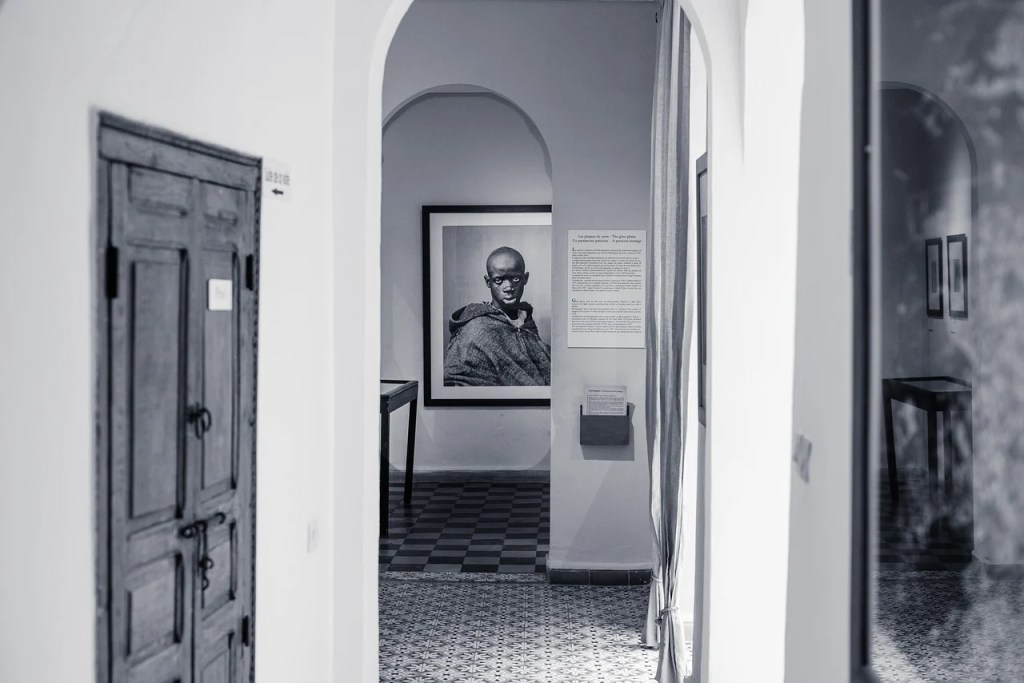
The Greensboro Project Space is hosting an art exhibition by UNCG student Paul Stanley Mensah! Mensah uses metal, wood, leather and fabric to bridge the past with the present. Based in rich Ghanaian heritage, Mensah delves into the impact of slavery, the power of unity, and the wisdom seen in Akan proverbs and Adinkra symbols.

When/Where: April 15th-19th, Reception is April 19th from 6:00pm-8:00pm.  111 February One Pl, Greensboro NC, 27406

Prices: FREE

SOURCES

 Ambrossini@me.com. (2023, September 27). Art and emotion – how artists convey feeling through brushstrokes. Angela Edwards. https://www.angelaedwards.co.uk/art-and-emotion-how-artists-convey-feeling-through-brushstrokes/#:~:text=What%20makes%20brush%20strokes%20so,connection%20with%20the%20artists%20hand. 

Cohen, A. (2019, September 9). Undressing the Erotic Symbolism in “The Swing” Fragonard’s Decadent Masterpiece . Why Fragonard’s “The Swing” is a Masterpiece of Rococo Art. https://www.artsy.net/article/artsy-editorial-undressing-erotic-symbolism-the-swing-fragonards-decadent-masterpiece 

Gilpin , W. (n.d.). 10 works on grief and loneliness by Tracey Emin and Edvard Munch. Royal Academy of Arts. https://www.royalacademy.org.uk/article/10-works-grief-loneliness-tracey-emin-edvard-munch 

Naar , H. (n.d.). Art and Emotion. Internet encyclopedia of philosophy. https://iep.utm.edu/art-and-emotion/#H2 

Nyansapo (wisdom knot)mfa thesis Exhibitionby Paul Stanley Mensah. Downtown Greensboro, Inc. (n.d.). https://www.downtowngreensboro.org/event/nyansapo-(wisdom-knot)mfa-thesis-exhibitionby-paul-stanley-mensah/7244/ 

Ruopp, S. (2020, June 23). The importance of expressing emotion through art. Arts Academy in the Woods. https://www.artsacad.net/the-importance-of-expressing-emotion-through-art/ 

Starry night:10 secrets of Vincent Van Gogh Night stars painting. Vincent van Gogh. (n.d.). https://www.vincentvangogh.org/starry-night.jsp 

Understanding Contemporary Art: A Deep Dive


Contemporary art is a very misunderstood art movement. It’s abstract aesthetic, lack of traditional standards, and many methods of execution lead people to believe that it is simple, lacking in substance, and something that anyone can do. Contemporary art is a global experience that can open a dialogue on social and cultural structures issues, but it also is an age of experimentation which has led to new forms of arts. In this article, we’ll gain a bit of a better understanding behind the mind of a contemporary artists and structure of contemporary art.

A Brief History in Contemporary

The globalization of the 21st century allowed the world of art to be integrated with one another, allowing artists of color and women artists opportunities to create art starting in the late 1950’s. Art changed from images of people, landscapes, and color with the early experimentation of abstraction, fantasy, and expressions. American art had been influenced by the art created in Europe for most of America’s history but all of that began to change with the popularity of prints and photography. Things changed dramatically with the growth of the industry, new technologies, and new capabilities to travel and explore different methodologies. The abstract expressionism movement and the new wave of pop art in the 1960’s became catalyst to the contemporary art movement. These two movements utilized the interest in expanding its art to mass media and dynamic, highly abstracted art. The old art world was pushed to the side in favor of the new emerging styles and genres of new artwork.

What Is the Contemporary Artist?

The contemporary art movement began in the late 20th century where artists began creating during the post war period, developing new styles and methods of art that are still relevant in the new art world. Contemporary artists use a wide range of mediums like charcoal, digital art, and sculptures to create work that is challenging or interesting. This type of artist must require themselves to think in an open-ended methodology with an inquiry-based approach but more importantly they must embrace the notion of artistic pluralism.  Artistic pluralism is the acceptance of a variety of artistic intentions, methods, and styles like minimalism, performance art, and video art! The artists goals are to question traditional ideas of the definition of art, what constitutes art, and how to create a dialogue with its viewers. This pluralism can make it difficult for viewers to summarize and accurately reflect the complex concepts and materials. I would argue that the difficulty makes the art more valuable because people are able to draw their own conclusions and interpretations.

The Contemporary Impact

In an ever-evolving world, contemporary artist gives a voice to challenge subjects like identity, values, and beliefs. It’s impact on art history by allowing artists to make commentary art on the current culture around them through literal and/or figurative depictions. It makes itself a visual historical record of life, capturing the feelings held by people of today’s time. With its constant push of boundaries and exploration of new ideas, it has allowed artists to create their own digital art technologies. The audience play an active role in contemporary art, using critical thinking to enhance the artwork through each person’s life experiences, opinions, and interpretations.

LOCAL EVENT: Arts Unbound Festival

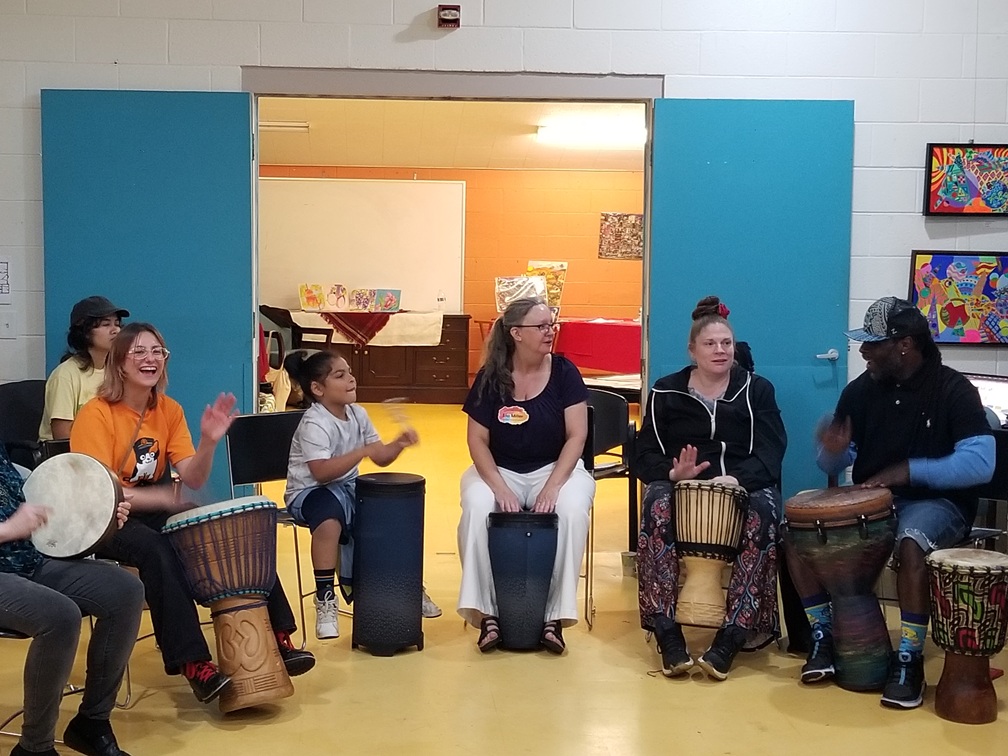
 Creative Aging Network (CAN-NC) is hosting it’s 3rd Annual Arts Unbound Festival! There will be studio tours all day featuring a Native American blessing of the land with Native American dancers. This festival will also feature an inter generational art featuring adult artists, an interactive drum circle, chair massages, vendors, basket weaving demonstrations, clay play, live music, and more! Come rain or shine, this is where you want to be!

When/Where: May 3rd 2025, from 10:00am to 3:00pm. 2400 Summit Ave, Greensboro NC, 27405

Prices: FREE

Link: https://can-nc.org/events

Sources

About Contemporary Art . About contemporary art (education at the getty). (n.d.). https://www.getty.edu/education/teachers/classroom_resources/curricula/contemporary_art/background1.html 

Contemporary Art in context. Art21. (n.d.). https://art21.org/for-educators/tools-for-teaching/getting-started-an-introduction-to-teaching-with-contemporary-art/contemporary-art-in-context/ 

Events and exhibitions. Creative Aging Network NC. (2025, March 7). https://can-nc.org/events 

IESA Arts and Culture. (n.d.). Why is contemporary art so important . IESA Arts and Culture. https://www.iesa.edu/paris/news-events/contemporary-art-importance#:~:text=Cultural%20Commentary,read%20about%20in%20history%20books. 

Libretexts. (2022, March 19). 1.2: Evolution of modern and contemporary art. Humanities LibreTexts. https://human.libretexts.org/Bookshelves/Art/History_of_Modern_and_Contemporary_Art_(Gustlin_and_Gustlin)/01%3A_How_Modern_and_Contemporary_Art_Evolved/1.02%3A_Evolution_of_Modern_and_Contemporary_Art 

Shotwell, M. (2023, June 27). Importance of contemporary art. Cultivate. https://www.cultivategrandrapids.org/post/importance-of-contemporary-art 


Anime’s Journey: From Japan to American Hearts

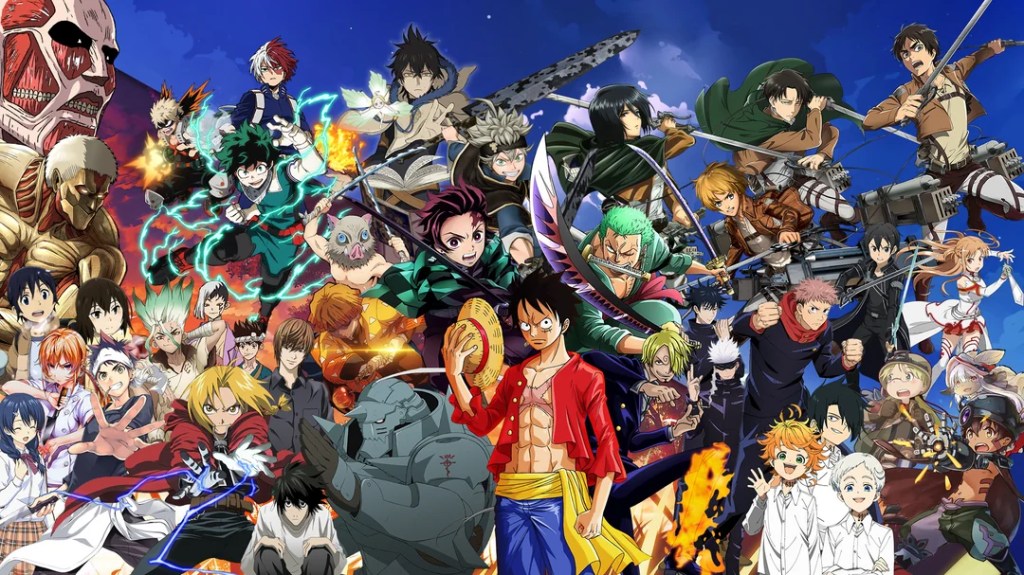
Anime has become extremely popular in the West today. It has changed from being altered shows to fit the West to becoming a part of western pop culture. We see anime like Demon Slayer, Jujustu Kaisen, and My Hero Academic make record numbers in the box office. In this article we will look at the origins of anime, when it was first introduced to America and it’s overall impact in American movie and literary culture.

Anime Origins

Anime is a hand-drawn or computer animation often originating in Japan. It’s wide range of genres have appealed to a variety of different audiences from romance to fantasy and slice of life cute shows. The vibrant colors, imaginative characters, storylines, and dramatic expressions are common characteristics seen in manga and anime shows. The very first anime ever produced was called Katsudō Shashin. It doesn’t have a definite date of publication; it is believed that it was made in between 1905-1911. The anime was only 3 seconds, and it shows a boy writing kanji before he looks at the audience and salutes them. This anime was the catalyst to the popular art form eventually coming over to the Western world. Anime didn’t really start to become popular in America until the 1960’s when the audience was introduced to Astro Boy and Speed Racer.

The Anime Boom

Astro Boy first debuted in America in 1963 that would be one of the major reasons anime gain traction in the West, but that didn’t come without sacrifice. Astro Boy had to go through significant changes in its titles, character names, and sometimes entire plot points! Speed Racer (also known as MachGoGoGo) had a better time adjusting to the American audience because of two main reasons. The first reason is because back in the 1960’s racing was a popular form of entertainment in America and Steve McQueen was a national icon which helped audiences relate with Speed Racer. Speed Racer was so popular it began to franchise, selling its own toys video games, and movies. America’s big anime boom happened in the mid 90s with shows like Pokemon and Dragon Ball Z. Both of these shows became a force in anime franchising within the States and would lead to the second boom in anime, introducing shows like Death Note, Bleach, and Naruto!

Anime’s Impact in America

Japanese animation and manga have become so popular in modern day America. Manga sales have quadrupled from 2019-200 with 28.4 million copies sold and is the 4th largest in the fiction category. Audiences have shown that they want to see more than just good guys vs. bad guys. Anime speaks to the hardships of adulthood and learning how to deal with difficult emotions which doesn’t just relate to the audience, but the audience then forms their own unique relationships with these imaginative characters.  It has also influenced music and American animation studios. This kind of influence allowed filmmakers to experiment with genres, themes and animation techniques beyond what they’re used to. American animators influenced by anime in their visual aesthetic and narrative styles with shows like Avatar the Last Airbender, Teen Titans and RWBY.You even see big stars like Megan Thee Stallion who wrote the song “Otaku Hot Girl” which is full of anime references. The beginning of the song even features Adam McArthur, the voice actor of Yuji Itadori from the popular anime series Jujutsu Kaisen.

LOCAL EVENT: Greensboro College Senior Art Show Reception

Who: Greensboro College

What: Come join Greensboro College as we celebrate the Art Department’s Senior Show Exhibition! Come see artists whom have created a variety of artwork that tackle different themes like color psychology and nostalgia! This will be the biggest graduating class for art, showcasing six artists’ (Including yours truly) different themes expressed through different mediums!

When/Where: April 22nd 5:00-7:00pm. Anne Rud Gaylon Gallery, Cowan Building. 815 W. Market St, Greensboro, NC, 27401

Prices: FREE

SOURCES

The impact of anime on American media: An in-depth analysis of cross-cultural influence. Jay Japan. (n.d.). https://www.jay-japan.com/blogs/otaku-spot/the-impact-of-anime-on-american-media-an-in-depth-analysis-of-cross-cultural-influence#:~:text=The%20Influence%20of%20Anime%20on%20American%20Youth%20Culture,niche%20within%20American%20youth%20culture. 

Katsudou Shashin. AniList. (n.d.). https://anilist.co/anime/101429/Katsudou-Shashin 

Long, P. (2023, July 15). 10 shows that helped bring anime to America. Game Rant. https://gamerant.com/shows-helped-bring-anime-america/#:~:text=10%20Astro%20Boy:%20America’s%20First,gaining%20traction%20in%20the%20West. 

Rogin, A., Mufson, C., & Boulter, M. (2024, May 18). What’s behind the growing popularity of Japanese comics and animations in U.S. PBS. https://www.pbs.org/newshour/show/whats-behind-the-growing-popularity-of-japanese-comics-and-animations-in-u-s 


GC Theater; ‘Dani Girl’

by Shaleea Gaillard

This February, on Valentine’s Day, I went to see a musical called “Dani Girl.” The Greensboro College Theater Department produced it. Before I go into my thoughts on the show itself, I would like to congratulate everyone who was in it and who helped make it as great as it was.  

Dani Girl is a musical written by Christopher Dimond and produced by Michael Kooman. It is about a nine-year-old girl named Dani who is battling leukemia. She has a fantastic imagination, and through her imagination, she fights to get her hair back. To do that, she needs to answer one question: “Why is cancer?”  

The show lasted 90 minutes and had four actors in total. Brianna Jones played Dani, Will Hoard played Marty, Azannah Surratt played the mother, Ralph, Cancer, God, and the father was played by Demari Jackson. 

Watching the show, the actors knew the characters. They had you laughing, crying, and soaked into the show. I don’t have anything to bring down the production they put on; my only negative thoughts about the show are that I didn’t feel like they were playing kids in some parts of the show. I don’t know if that was how it was written, but for me, some parts seemed too much like the “kids” were adults more so than other parts in the show. Other than that, the acting, the music, and the singing were all amazing and the actors worked hard, and it showed.  

The musical’s ending was unfortunate and had me in tears. However, it is amazing that they were able to produce such a tear-jerking performance, and I would highly recommend anyone watch a production put on by the theater department at Greensboro College. 


Opinion Piece: AI Art and its Effects on the Artist Community

AI art is a very controversial subject in the art community. For me, I see it as a very real threat to small artists that are trying to grow their clientele. Issues such as copyright, compensation and artists displacement are topics often brought up when having discussions about AI-generated art. In this article, we will gain a better understanding of what AI is, why artists are mad, and what are some of the ways that artists can protect themselves.

What is AI Art?

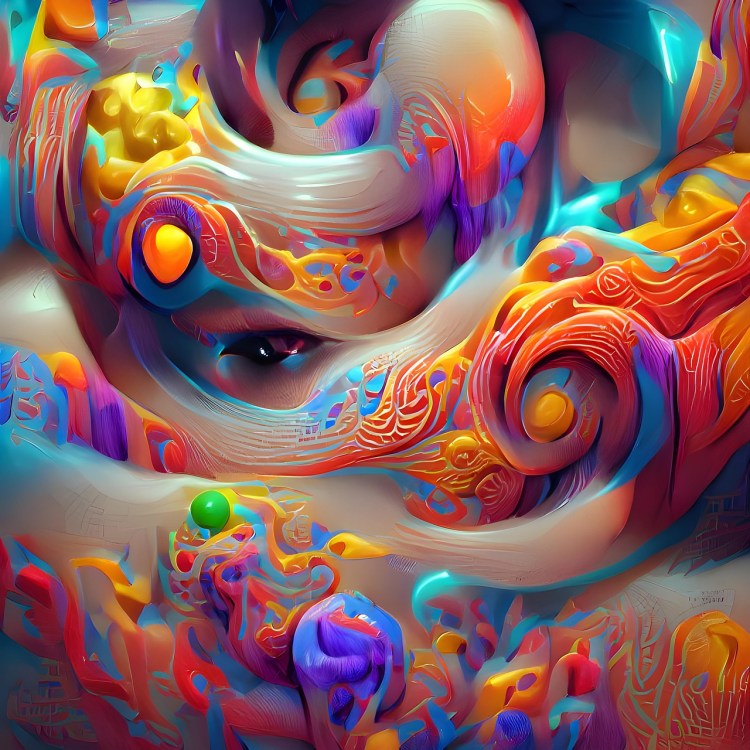
AI artwork is created with the assistance of artificial intelligence. This kind of artwork is made through prompts into a system. It uses algorithms that learns from data inputs to generate new work. Instead of the program learning or studying an artwork like a student, it instead traces over the artwork then claims it as its own. It will also cut, distort, and collage artwork from its libraries of human artwork to replicate styles and generate pieces. These decisions that the AI makes are vulnerable to inaccuracies due to planted or installed biases. While these artworks can be beautiful, it lacks that important emotional or cultural impact of a piece.

Why Are Artist so Mad

Though AI art can’t fully replace artists, artists feel devalued when they see these AI programs generate images with their artwork just to sell it at a lower price. When this is practiced against artists, they feel disrespected and feel the impact of the lowered income. Another point of contention for artists is that these programs will not ask permission to use their work when it makes these generated pieces. There is also a lack of legal protection. AI art’s copyright is a mess. It rides the line of general copyright laws and are just barely different so that they are not flagged for infringement. AI art is still fairly new so copyright laws around AI art are not as clear and if there are laws, they aren’t as enforced.

How to Fight Back

With AI art and technology revolutionizing, it can be a challenge for artists to protect their work, especially in the unknown beast that is AI. While there is not a lot protection now, there are two solid ways an artist can defend themselves. Artist have begun to learn how to mask their artwork when they post on social media. Tools like Anti-DreamBooth, Mist and Glaze add tiny Changan images pixels. These changes are naked to the human eye but when an AI program attempts to scrape an image, it won’t be able to decipher it properly. Glaze is the program that is most recommend since its free, you can download it as an app and its straightforward.

Another way to protect your artwork is to consider where you post it. Art sites like DeviantArt and Flickr have become a feeding ground for AI companies to scrape art. A quick solution would be to make your accounts private but that would make it very difficult for small artist to promote themselves. Consider posting your to Cara. Cara is a new platform that has collaborated with Glaze researchers to implement No AI tags on images posted to their site.

LOCAL EVENT: Artist Afternoon

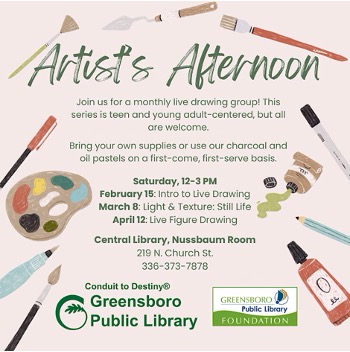
Each month at the Central Library, they study a new artistic concept. This month’s focus is on practicing how to render light and textures using proper displays. You can bring your own supplies or use the charcoal provided but it is first come first serve! Meet and mingle with fellow artist and art enthusiast to create something beautiful!

When/Where: April 12th from 12:00-3:00pm.  Central Library Nussbaum 219 N Church St. Greensboro NC 27401

Prices: FREE

Link: https://www.eventbrite.com/e/artists-afternoons-central-library-tickets-1225543205719

SOURCES

Ai art and its impact on artists | proceedings of the 2023 AAAI/ACM Conference on AI, Ethics, and Society. (n.d.). https://dl.acm.org/doi/10.1145/3600211.3604681 

Artist’s afternoons @ central library. Eventbrite. (n.d.). https://www.eventbrite.com/e/artists-afternoons-central-library-tickets-1225543205719 

Heckkila , M. (2024, November 21). Four ways to protect your art from ai . MIT Technology Review. https://www.technologyreview.com/2024/11/21/1107108/four-ways-to-protect-your-art-from-ai/#:~:text=Tools%20such%20as%20Mist%2C%20Anti,you’ve%20shared%20it%20publicly. 

Roller, J. (2023, November 29). AiArt: Why some artists are furious about ai-produced art. IEEE Computer Society. https://www.computer.org/publications/tech-news/trends/artists-mad-at-ai 

Wakelee-Lynch, J. (2024, October 11). Ai’s impact on artists. LMU Magazine. https://magazine.lmu.edu/articles/mimic-master/