by: Zeth Vejar
Sofonisba Anguissola
During the Renaissance women were forbidden to be apprentices to master artists. But many female artists bypassed that rule by having fathers who were also artists and trained with them instead. Sofonisba though was sent by her father to study with other artists. During the Feminist movement of the 1970’s Sofonisba, who was once an unknown painter to most was rediscovered. Nina Relf, a feminist art critic wrote that Sofonisba “paved the way for many other female artists who would later follow in her footsteps.”
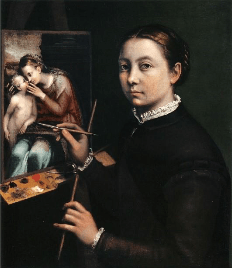
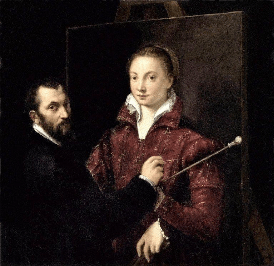
Sofonisba Anguissola Self portrait at the easel, 1556 Sofonisba Anguissola, Bernadino Campi Painting Sofia Anguissola, c.1550
Sofonisba Paints herself as a “woman of virtue”, and in many of her paintings she identifies herself as “Virgo” Each of them consists of herself wearing a black dress and a white collar. “Sofonisba who regularly identified herself as a virgin in her signatures would have clearly identified herself with the Virgin Mary.” (Farber, Alan) In the painting of Bernadino Campi painting Sofonisba, he is shown painting Sofonisba, and looks out towards the viewer, which puts us in the perspective of Sofonisba. And because she’s painted it like this; She takes the roles of artist and subject and reverses them.
Artemisa Gentileschi
Due to her empowering depictions of women, she is seen as an important figure for feminist art and literature. And according to the National Gallery she is “The most celebrated female painter of the 17th Century” By naming her painting “Self-Portrait as the Allegory of painting” she self identifies as the female personification of painting.
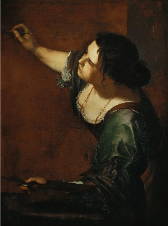
Self-Portrait as the Allegory of Painting, 1638-39
At 17 she was assaulted by a close friend of her fathers, and her tutor, Agostino Tassi, and betrayed by her female chaperone. This event influenced both her life and her career. I believe it also influenced her painting of Judith Slaying Holofernes. Both women play an active role in his beheading by forcing his head down and even the maid helping by holding him down. It seemed in a way what she would have wanted her female chaperone to do instead of idly standing by. Her painting of Susanna and the elders shows a vast difference to other paintings of the story. Susanna’s face looks annoyed and disgusted and looks as if she’s wanting to shove them away. Erica Reed wrote that Artemisa “emphasizes Susanna’s distress and active response.”

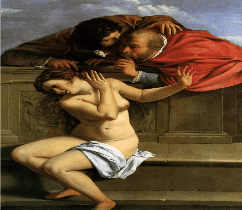
Judith Slaying Holofernes 1620, (left), Susanna and the Elders. 1610 (right)
Elisabeth Louise Vigée Le Brun
Elisabeth wrote that her mother thought her to be awkward and ugly, despite those words of discouragement she grew up to be very successful and became a court painter to Marie Antoinette creating over 30+ paintings of her. Although her talent was recognized by Marie Antoinette there were several that claimed “Monsieur Menageot finished her paintings for her” People were also saying that she must have attracted wealthy men to help her with her success.
This particular painting of Marie Antoinette was highly controversial because they people felt like Marie had basically been drawn in her underwear.
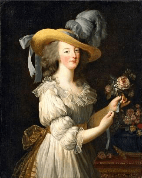
Marie Antoinete in a Chemise Dress, 1783. The Met Museum.
Elisabeth became a single mother leaving her husband and taking her daughter with her when she fled France due to being targeted for being associated with Marie Antoinette during the French Revolution.
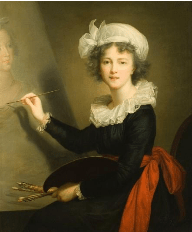
Self Portrait 1790
 GREENSBORO COLLEGE ART COLUMN