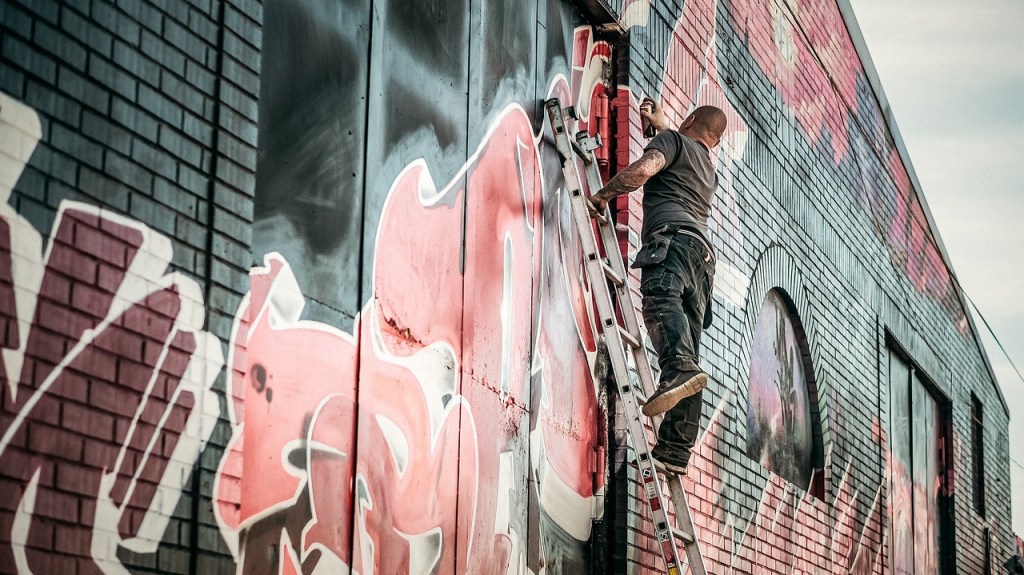
Graffiti can be created in many different ways ranging from simple symbols and lettering to elaborate wall murals. It is such a unique form of creating artwork and is an art style that faces a lot of scrutiny. In most countries, it is seen as an act of vandalism. From the method to the message, graffiti art is one of the most controversial ways of creating art. In this article we take a look at graffiti art’s history and the interesting duality it holds in different communities.
What is Graffiti?
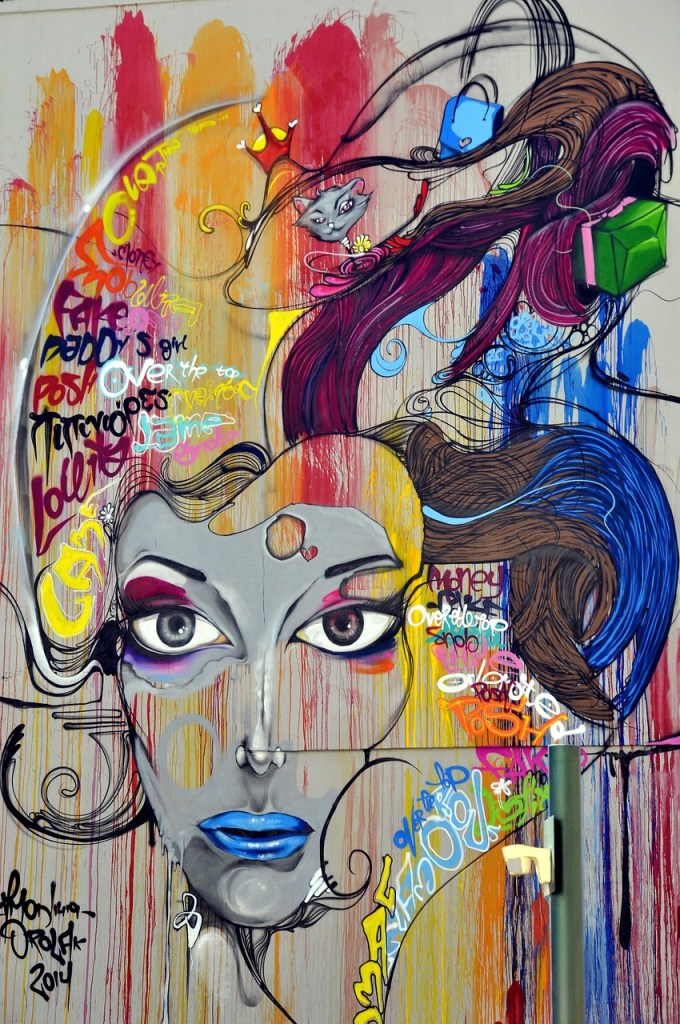
Graffiti is more than just spray paint on a wall. The term “graffiti” comes from the Greek word “graphein” which means to scratch, draw, or write. This style of art can be described as an artistic expression of identity and an outlet for creativity, to create social connections and celebrate achievements. It also allows people to transform different areas into spaces of empowerment and a place to congregate. One of graffiti’s core foundations are that it pushes the boundaries of conventional aesthetics and political expression.
But that’s not it’s only purpose. They can become a cultural and historical map for a city! For example, in East Los Angeles, Mexican American’s artistic influence began with Pachuco counterculture back in the 1940’s. These early origins allowed Mexican American graffiti to establish a rich cultural and artistic traditions. It encourages us to see different viewpoints in a much different way than traditional art because of the tools needed, environmental parameters, and time restraints. Simple tags turned into large, colorful, and elaborate pieces that could take up the length of subway cars!
Graffiti’s History

The origins of graffiti can be traced back to different ancient societies. Wall etches are found in countries like Egypt, Greece and Rome and these etches communicate a multitude of subjects from everyday life to political events and propaganda. During World War II, soldiers drew their own graffiti called Kilroy. Kilroy was a simple drawing of a bald man with a large nose peeking over a ledge. This simple graffiti would connect and motivate their fellow man. In the United States, graffiti had an evolution during the mid 20th century, seen in New York and Philadelphia.
Street walls became dynamic canvases using unique language codes and symbols to make an anonymous statement about socioeconomic limitations and racial realties. Early graffiti artists were called taggers or writers and all of them shared a common goal of having their work seen by as many people as possible. Graffiti art began to develop separately from the traditional, institutionalized art forms, creating a new world art with its own unique style, aesthetics, and technique.
Graffiti’s Duality
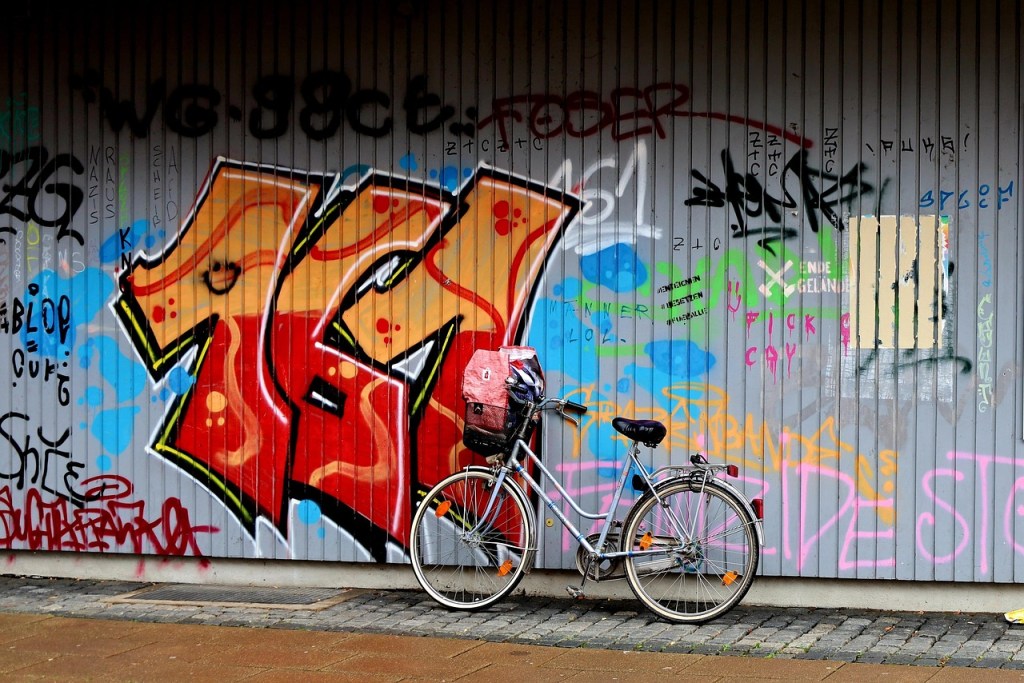
So, what’s the problem? Why is graffiti so controversial? Graffiti holds two contronym meanings. It straddles the line of between being seen as an act of vandalism and street art that is a product of the culture around it. Some see graffiti as street art that tackles important issues while others see graffiti as a vandalism crime that devalues the community. Contemporary graffiti’s own controversial nature is not the problem but the way it is produced can become an issue. Some artists will make their artwork on public or private properties without first gaining the permission of the property holder.
Some artists even use their arrest and charges associated with the art to elevate their own careers. Places like Central Los Angeles and East Los Angelos are more likely to criminalize graffiti because of it’s associate on with gang activity. On the positive side, this street art can represent society’s pulse and sentiments, channeling marginalized voices and sparking conversations with each piece. Graffiti is more likely to be recognized as artwork if it is made in an art district where they are labeled as beautification projects.
LOCAL EVENT: The Greensboro Food Truck Festival!
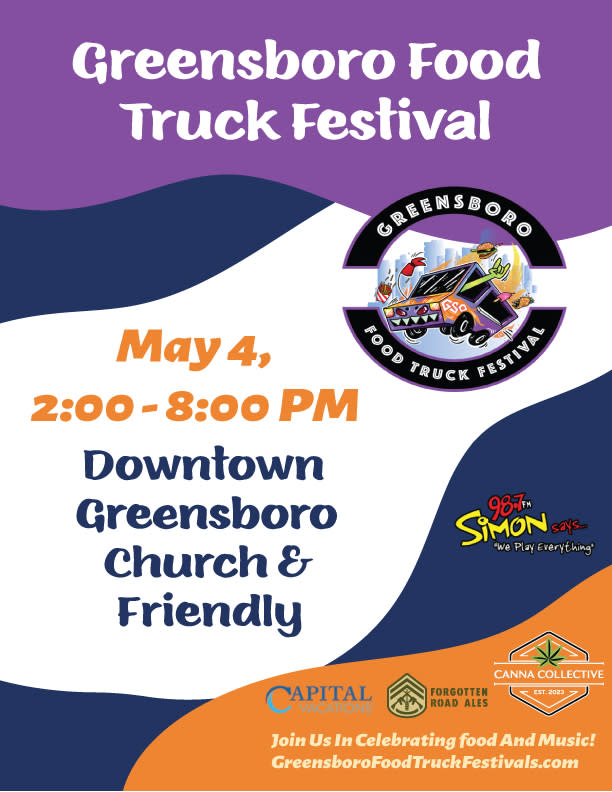
Come and celebrate the end of the semester by going to Greensboro’s Food Truck Festival! This will be the 14th year of the festival, and over 50 trucks will line Church St. and Friendly Ave! Not only will be there be activities at the history museum but you can enjoy the music, see craft vendors and enjoy craft beer! (21 or over if you want that alcohol, otherwise you’re drinking juice).
When/Where: May 4th, 2025 from 2:00pm-8:00pm! Church St. and Friendly Avenue, Greensboro NC.
Prices: FREE
Link: https://www.downtowngreensboro.org/event/greensboro-food-truck-festival/7256/
SOURCES
Colombini, A. (2018, December 2). The duality of graffiti: Is it vandalism or art?. CeROArt. Conservation, exposition, Restauration d’Objets d’Art. https://journals.openedition.org/ceroart/5745
Flair, C. (2024, January 10). Uncovering the societal impact of graffiti – creative flair blog. Creative Flair Blog – Hub of creative reads, news, insights. https://blog.creativeflair.org/uncovering-the-societal-impact-of-graffiti/
Soergel , A. A. (2021, September 14). The writing on the wall: Exploring the cultural value of graffiti and street art. UC Santa Cruz News. https://news.ucsc.edu/2021/09/graffiti-street-art.html
Street and graffiti art movement overview. The Art Story. (n.d.). https://www.theartstory.org/movement/street-art/
 GREENSBORO COLLEGE ART COLUMN