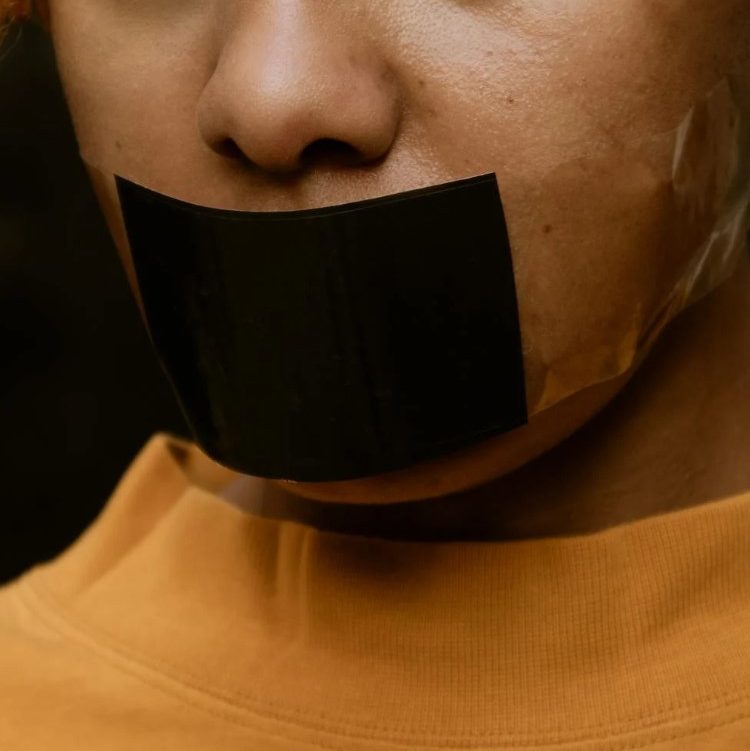
Art is known for being one of the most expressive, creative ways to express ideas, convey deep emotions and/or bring awareness to an issue. Art also has a long history of being censored or altered to fit societal norms and morals. Art has had to toe the line between freedom of expression and cultural sensitivities. There are groups, institutions and even governments that have censored and sanitized what is even considered art. Who has the authority to determine what art is and is not allowed? What kinds of art face the most scrutiny? What can you do as an artist to fight censorship? In this article we will gain a better understanding of what and why is behind censorship.
Who Put These Guys in Charge?
The Government: In the United States, art is broadly protected by the Constitution’s first amendment, but it is easy for the government to use laws and technicalities to remove artwork. David Pulphus was a high school artist that created a painting that was in response to the police shooting of Micheal Brown. It was displayed for six months in the U.S Capital before it was removed because of its “Anti-police rhetoric.” The vague language of the Congressional Art Exhibition justified its removal quoting that “exhibits depicting subjects of contemporary political controversy or a sensationalistic or gruesome nature.” In other countries with little or no right of free speech can have the artist face jail time and even have their studios potentially destroyed like Chinese Ai Weiwei.

Private Institutions: Private museums and private organizations can censor, restrict, and refuse to display controversial art if it does not align with their own moral or business values. Art directors will face all kinds of pressures to remove art because of decisions from donors and board members if it could be potentially seen as offensive or inappropriate for children. A respondent to The Censorship Horizon recounts a story from a director where several donors in the last 4-5 years told them that their exhibits were “too woke” and “focus too much on social justice.” One board member had even complained about the emphasis on inclusion, stating that “we don’t want people bussed into the city to see our museum.”
Who’s Under the Magnifying Glass?
The David Statue
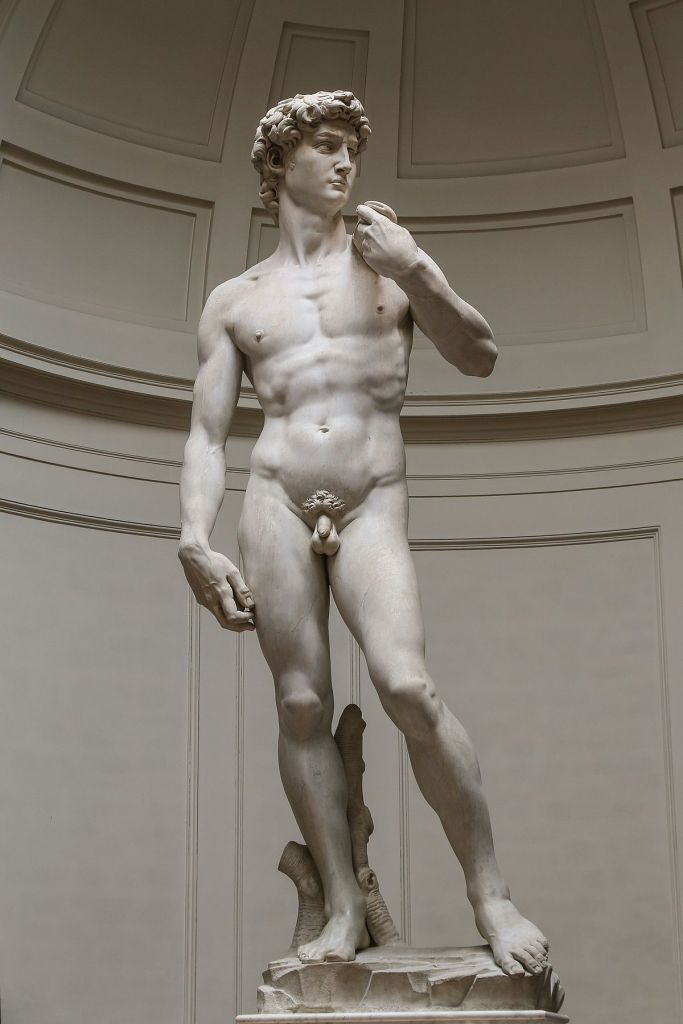
The Narrative Behind Nudity: Nudity in art has always been a factor in labeling artwork as indecent or inappropriate. Its instructional purpose is often not considered because it is initially sexualized by the public. Floridian principal Hope Carrasquilla was asked to resign from Tallahassee Classical School after sixth grade students were taught about the Italian artist Michelangelo. During the lesson, a picture of the David Statue was shown, outraging parents because of its “inappropriate nature”. Its historical and academic qualities were pushed aside because of this initial sexualization of the human body. Artists today like Edgar Degas and Hildegarde Handseme want to push away the sexual narrative of the human body and instead capture its natural and beautiful forms.
Chris Ofili The Virgin Mary 1996.
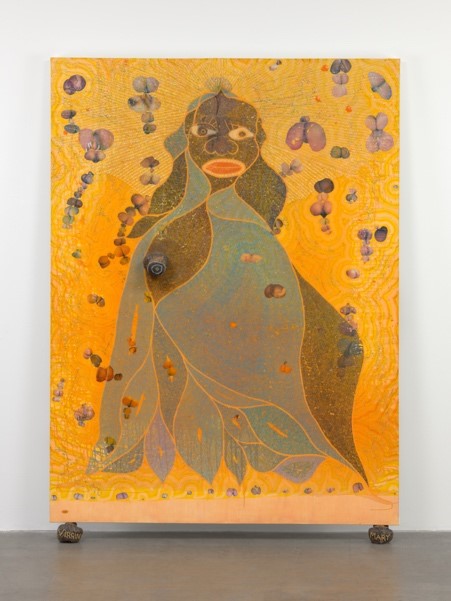
Religious Influence and Misunderstandings: Religion and art have had a back-and-forth relationship for centuries. Artwork has been used to illustrate holy events, symbols, and spiritual concepts. Religion has also played a part in censoring artwork, especially when it is misinterpreted as disrespectful or devaluing traditional religious values. Chris Ofili’s “The Holy Virgin Mary” initiated outrage from the public as its use of elephant dung and bare butts’ source from pornographic magazines. Mayor Giuliani even threatened to cancel a larger exhibition and even cut the funding for the Brooklyn Museum if it was not removed. Giuliani also threatened to cut the museums’ budget. Fortunately, a federal judge ruled in favor of the museum as Ofili described the painting as a hip-hop version of the Virgin Mary.
Fight the Power!

Strategy #1: Meet the Censoring Party: This is one of their harder strategies to implement but it does not mean you should not try! If possible, when you see the threat of censorship emerging towards your artwork try to meet the opposing party. It is important to remain calm, courteous, and show respect. These kinds of meetings have a delicate nature, and it can turn a situation upside down if your first approach is aggressive. Try to resolve the bubbling issues before it boils over into the public and be open to reasonable compromises.

Strategy #2: Consider your Legal Options: If you cannot reach an agreement or you are threatened by an organization it is important to document and keep everything from the first incident. For artist who need help organizations like the American Civil Liberties Union, Student Press Law Center, and the Foundation for Individual Rights in Education can put you in touch with volunteer lawyers free of charge. Cases in artistic freedoms can be pushed off because of a lack of evidence and the debate around the first amendment for both the artist and organization.

Strategy #3: Connect with Others: Fortunately, artists can still find ways to display their work if the worst happens and their artwork is removed. Groups like Don’t Delete Art, Freemuse, and Artists at Risk campaign to defend, display, safeguard, and protect artistic expressions. Find and join discussions around art censorship and take advantage of social media. Make yourself aware of current censorship issues and become an advocate for your work!
LOCAL EVENT: Geeksboro Market
If you are a nerd or geek like me then this is the event for you! This is a free local monthly market highlights tabletop gaming, card games, free to play awarded games, video games, tournaments and more!
Where/When: Mar 15th, 2025, from 12:00pm-6:00pm. 4645 West Market St. Greensboro, NC 27407
Link: https://www.eventbrite.com/e/geeksboro-market-tickets-969328386297
Sources
Aggie, T. C. (2023, April 24). A brief history of nudity and censorship in art. The Aggie. https://theaggie.org/2023/04/24/a-brief-history-of-nudity-and-censorship-in-art/
Artist at Risk. (2025, January 16). The censorship horizon. PEN America. https://pen.org/report/the-censorship-horizon/#heading-4
Garnett, J. (2024a, October 30). Judge upholds removal of controversial student painting from U.S. Capitol; appeal planned. National Coalition Against Censorship. https://ncac.org/news/blog/judge-upholds-removal-of-controversial-student-painting-from-u-s-capitol-appeal-planned
Geeksboro market. Eventbrite. (n.d.). https://www.eventbrite.com/e/geeksboro-market-tickets-969325507687
Hiestand, M. (n.d.). National Scholastic Press Association. Fighting censorship: A checklist. https://studentpress.org/nspa/fighting-censorship-a-checklist/
Kim, J. (2023, May 1). A Florida principal who was fired after showing students “david” is welcomed in Italy. NPR. https://www.npr.org/2023/05/01/1173017248/florida-principal-david-michelangelo-visit-italy
Leadingham, S. A. (2024, June 27). Art censorship: First Amendment violation or private free speech?. Freedom Forum. https://www.freedomforum.org/art-censorship/
National Coalition Against Censorship. (2024, August 19). Artists, Free Speech Orgs to protest suppression of artistic expression by social media companies. https://ncac.org/news/press-release/artists-free-speech-orgs-to-protest-suppression-of-artistic-expression-by-social-media-companies#:~:text=About%20Artists%20at%20Risk%20Connection,live%20and%20work%20without%20fear.
Religion. National Coalition Against Censorship. (2022, December 9). https://ncac.org/issue/religion
 GREENSBORO COLLEGE ART COLUMN